Certified Electrician in Marietta, GA services are not just about installing wires and outlets—they are about protecting your home, business, and family from serious electrical hazards. Faulty wiring, outdated panels, and improper installations can lead to fires, failed inspections, and expensive repairs. Many property owners assume all electrical work is the same, but even small code violations can create long-term safety risks. That is where a certified electrician makes the difference. By following state licensing laws, local building regulations, and the National Electrical Code, trained professionals ensure every electrical service meets strict safety standards. This article explains how electricians stay compliant, what inspections involve, and why working with a licensed electrical contractor in Marietta truly matters.
Why Electrical Code Compliance Matters in Marietta

Electrical codes are not arbitrary rules. They exist to prevent electrical fires, electrocution, system overloads, and structural damage. In Georgia, electrical work must comply with the Georgia State Minimum Standard Electrical Code, which adopts and enforces editions of the National Electrical Code (NEC). Local municipalities such as Marietta and Cobb County enforce these requirements through permits and inspections.
When electrical systems are installed incorrectly, the risks include:
- Overheating conductors
- Arc faults
- Shock hazards
- Improper grounding
- Insurance claim denials
- Failed property sales inspections
A certified electrician understands these risks and uses updated code standards when performing panel upgrades, rewiring, generator installations, EV charger installations, lighting retrofits, or troubleshooting.
Licensing Requirements for Electricians in Georgia
Georgia requires electricians to be licensed through the Georgia Secretary of State. There are two primary categories:
Class I Electrical Contractor
- Limited to single-phase electrical installations
- Residential and light commercial work
- Projects under a specific amp and voltage threshold
Class II Electrical Contractor
- No restrictions on project size
- Industrial and large commercial systems
- Three-phase systems and higher capacities
To obtain a license, electricians must:
- Pass a state examination
- Demonstrate years of field experience
- Carry liability insurance
- Maintain continuing education
This licensing process ensures that any certified electrician performing electrical service in Marietta has the technical knowledge required to follow current NEC standards.
The National Electrical Code and Local Amendments
The National Electrical Code is updated every three years. It provides standards for:
- Wiring methods
- Circuit protection
- Grounding and bonding
- GFCI and AFCI requirements
- Load calculations
- Service panel sizing
- Surge protection
Marietta follows the Georgia-adopted version of the NEC. Local building departments may also enforce additional requirements related to permitting, inspections, and zoning.
Electricians must stay current with code changes. For example, recent NEC updates expanded requirements for:
- Arc-fault circuit interrupters in living spaces
- Ground-fault protection in kitchens and laundry areas
- Surge protection devices in residential services
- EV charger circuit specifications
A professional electrical contractor ensures installations reflect these modern safety standards.
The Permit Process in Marietta, Georgia
When Is a Permit Required?
Most electrical projects require permits, including:
- Panel replacements
- New circuit installations
- Generator installations
- Major rewiring
- Service upgrades
- Commercial build-outs
Minor repairs may not require permits, but any substantial electrical modification usually does.
How Electricians Handle Permits
A certified electrician typically:
- Submits permit applications
- Provides project details and load calculations
- Schedules inspections
- Ensures corrections if needed
This protects homeowners from liability and ensures the project passes city inspection.
Skipping permits may seem faster or cheaper, but it often leads to:
- Fines
- Required removal of work
- Failed home inspections during resale
- Insurance complications
Load Calculations: Preventing Overloads Before They Happen

One of the most critical ways electricians stay up to code is through proper load calculation.
Load calculation determines whether your electrical panel can safely handle:
- HVAC systems
- Kitchen appliances
- Electric water heaters
- EV chargers
- Lighting circuits
- Dedicated appliance circuits
The NEC provides detailed formulas for calculating total demand load. If a panel is undersized, a certified electrician will recommend a service upgrade—often from 100 amps to 200 amps in modern homes.
Improper load calculations can result in:
- Frequent breaker trips
- Overheated wiring
- Electrical fires
Grounding and Bonding: The Foundation of Safety
Grounding ensures excess electrical current has a safe path to the earth. Bonding connects metal components to eliminate voltage differences.
Up-to-code systems require:
- Grounding electrode systems
- Properly bonded service panels
- Metal piping bonding
- Ground rods meeting depth requirements
Improper grounding is one of the most common code violations found during inspections. A skilled electrical contractor verifies grounding integrity during service calls and installations.
GFCI and AFCI Protection Requirements
Modern codes require safety devices in specific areas.
GFCI (Ground Fault Circuit Interrupter)
Required in:
- Kitchens
- Bathrooms
- Garages
- Outdoor outlets
- Laundry areas
GFCIs protect against electric shock by shutting off power when imbalances occur.
AFCI (Arc Fault Circuit Interrupter)
Required in:
- Bedrooms
- Living areas
- Dining rooms
- Hallways
AFCIs prevent electrical fires caused by arc faults.
A certified electrician ensures the correct breakers or receptacles are installed in accordance with NEC standards.
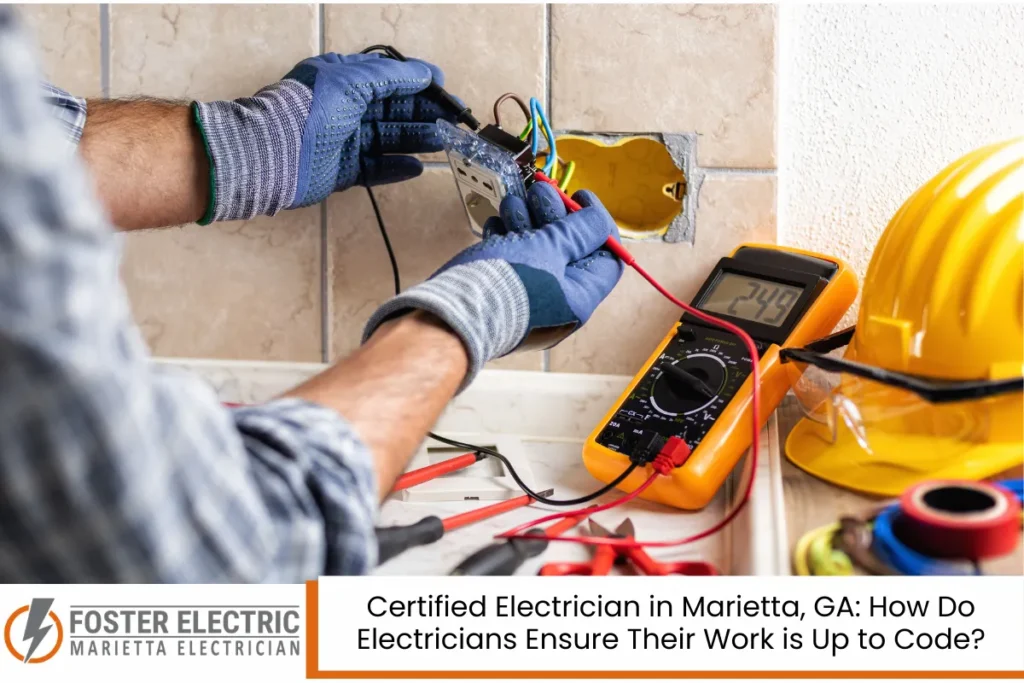
Read Certified Electrician in Marietta, GA: Are Electricians Required to Follow Building Codes?
Electrical Panel Upgrades and Code Compliance

Outdated panels pose serious risks. Older brands with known safety concerns or insufficient amperage cannot meet today’s electrical demands.
Upgrading a panel involves:
- Proper service disconnect installation
- Accurate labeling of circuits
- Breaker compatibility verification
- Surge protection installation
- Coordination with the utility company
In Marietta, inspections verify that service entrance conductors, meter bases, and panel bonding meet code requirements.
Wiring Methods and Materials
Electrical codes specify acceptable wiring methods, including:
- NM cable (Romex) for residential interiors
- Conduit systems for commercial or exposed installations
- Proper cable support spacing
- Fire-rated penetrations
Electricians ensure wire gauges match breaker ratings. For example:
- 15-amp circuits require 14-gauge copper
- 20-amp circuits require 12-gauge copper
Undersized wiring is a serious violation and fire hazard.
Commercial Electrical Compliance in Marietta
Commercial properties follow stricter requirements, including:
- Emergency lighting systems
- Exit signage circuits
- Dedicated HVAC disconnects
- Three-phase systems
- Equipment grounding conductors
An experienced electrical contractor understands occupancy classifications and local building codes. Inspections for commercial projects are often more detailed and involve multiple review stages.
Continuing Education and Code Updates
To maintain certification in Georgia, electricians complete continuing education. This keeps them informed about:
- NEC revisions
- Renewable energy installations
- Battery storage systems
- EV charging station standards
- Smart home wiring requirements
Technology evolves quickly. A certified electrician ensures installations remain safe and future-ready.
Inspection Day: What Happens?
After completing permitted work, an inspector evaluates:
- Proper breaker sizing
- GFCI/AFCI installation
- Panel labeling accuracy
- Grounding electrode installation
- Wire protection from physical damage
- Box fill compliance
If corrections are required, electricians address them promptly and schedule reinspection.
Passing inspection confirms compliance with state and local standards.
Why Hiring a Certified Electrician Protects Your Investment

Choosing a licensed professional offers several advantages:
- Compliance with Georgia law
- Insurance protection
- Proper permit handling
- Accurate troubleshooting
- Safer installations
- Long-term reliability
Unlicensed work may appear cheaper upfront but often results in costly corrections.
Electrical systems are not DIY projects. Mistakes can cause structural fires, injuries, and legal complications.
Signs Your Electrical Work May Not Be Up to Code
Watch for these warning signs:
- Frequently tripping breakers
- Warm outlets or switches
- Flickering lights
- Ungrounded outlets
- Aluminum branch wiring concerns
- Lack of GFCI outlets near water sources
- Overcrowded electrical panels
If you notice these issues, scheduling an electrical inspection is the safest next step.
Modern Safety Additions Required by Code
Recent updates emphasize safety enhancements such as:
- Whole-house surge protection
- Tamper-resistant receptacles
- Dedicated circuits for large appliances
- EV charger installations with proper load calculations
- Generator interlock kits or transfer switches
Electricians ensure these features meet code and operate correctly.
How Code Compliance Affects Home Sales
Home inspections frequently uncover electrical violations. Common issues include:
- Double-tapped breakers
- Improper junction boxes
- Missing panel covers
- Non-permitted upgrades
Hiring a certified electrician before listing a property helps avoid delays during closing.
The Cost of Cutting Corners
Non-compliant electrical work may result in:
- Increased insurance premiums
- Voided warranties
- Failed inspections
- Safety hazards
- Legal liability
Electrical codes are designed to prevent disasters. Compliance protects lives and property.
Final Thoughts on Electrical Code Compliance in Marietta
Electrical systems are the backbone of every modern home and business. In Marietta, strict adherence to Georgia’s adopted National Electrical Code ensures safety, reliability, and legal compliance. A certified electrician understands permitting requirements, load calculations, grounding standards, and inspection procedures. Whether upgrading a panel, installing new circuits, or completing a commercial build-out, code compliance is never optional—it is essential. Working with a qualified electrical contractor ensures every electrical service meets current safety standards and passes inspection the first time.
Certified Electrician in Marietta, GA – Foster Electric

At Foster Electric, we take pride in delivering safe, reliable electrical service throughout Marietta, Georgia and the surrounding areas. As a certified electrician team, we understand Georgia code requirements and handle everything from panel upgrades and lighting installations to troubleshooting and complete rewiring. We secure permits, schedule inspections, and ensure every project meets NEC standards.
If you need a dependable electrical contractor, we are ready to help. Our team responds quickly, communicates clearly, and prioritizes safety on every job. Whether you are upgrading your home or managing a commercial project, we provide professional workmanship you can trust. Call us today at (404) 855-4797 or fill out our contact form to schedule your service.
Frequently Asked Questions
1. How often should a home in Marietta have an electrical safety inspection?
Homes should undergo a professional electrical inspection every 3 to 5 years, especially if the property is over 25 years old. Inspections are also recommended before purchasing a home, after major renovations, or when adding high-demand appliances such as EV chargers. Regular inspections help identify outdated wiring, overloaded panels, improper grounding, and hidden hazards before they become dangerous. A certified electrician will evaluate your system’s overall condition and recommend upgrades if necessary to meet current code standards.
2. Can homeowners perform their own electrical work in Georgia?
Georgia law allows limited homeowner electrical work on their primary residence, but permits and inspections are still required in many cases. However, electrical systems are complex and dangerous. Mistakes can cause fires, serious injury, or failed inspections. Hiring a licensed electrical contractor ensures compliance with state and local regulations. Professional installation also protects your homeowner’s insurance coverage and avoids costly corrections later.
3. What is the difference between a code violation and a safety hazard?
A code violation means the installation does not meet current NEC or local standards. A safety hazard is a condition that poses immediate risk, such as exposed live wires or overheating conductors. Some code violations may not be immediately dangerous but can become hazardous over time. A certified electrician can determine whether an issue requires urgent correction or modernization to align with updated regulations.
4. Are electrical codes the same for residential and commercial properties?
No. While both follow the National Electrical Code, commercial properties must meet additional requirements based on occupancy type and building use. These often include emergency lighting, exit signage circuits, higher load capacities, and stricter grounding standards. Commercial inspections are typically more comprehensive. An experienced electrical contractor understands these differences and ensures compliance for each project type.
5. Does upgrading to a smart home system require electrical code updates?
Smart home devices themselves may not require panel upgrades, but adding new circuits, smart breakers, or automation hubs may trigger code compliance requirements. For example, new dedicated circuits must meet breaker sizing and grounding standards. If the upgrade increases electrical demand, a load calculation may be necessary. A certified electrician ensures smart home improvements integrate safely with your existing system.
Disclaimer: This article is for informational purposes only and does not constitute legal or technical advice. Electrical codes and regulations may change. Always consult a licensed electrician in Marietta, Georgia for project-specific guidance and compliance verification.
Read Electrician in Marietta, GA: What’s the Average Cost of Rewiring a 3-bedroom House?