An electrician will tell you that surge protectors can reduce lightning-related electrical damage, but no device can guarantee complete protection from a direct strike. That distinction matters when one storm can damage appliances, HVAC controls, televisions, computers, security equipment, and smart-home devices throughout your property. Standard power strips offer limited defense, while a properly installed whole-home surge protective device can divert many dangerous voltage spikes before they reach branch circuits. The strongest strategy combines service-entrance surge protection, point-of-use devices, effective grounding and bonding, and professional electrical inspection. For Marietta homeowners, understanding how these layers work helps prevent false confidence, unexpected repair bills, and avoidable downtime. Here is what surge protection can realistically do—and where its protection ends.
The Direct Answer: Surge Protectors Reduce Risk but Cannot Stop Every Lightning Event
Surge protectors can prevent or limit damage caused by many voltage spikes associated with lightning. However, they are not force fields, and they do not make a house lightning-proof.
A nearby strike may induce excess voltage in utility conductors, communication cables, outdoor equipment wiring, or other conductive paths. A correctly selected surge protective device, commonly called an SPD, reacts to that abnormal voltage and redirects part of the surge toward the grounding system.
That response can spare sensitive electronics from receiving the full transient voltage.
A direct lightning strike is different. Lightning carries an enormous amount of energy and may enter a structure through several paths at once. It can travel through electrical service conductors, cable lines, antennas, metal piping, exterior wiring, or the building itself. A plug-in device alone is not designed to manage that type of event.
The practical answer is therefore based on risk reduction:
- A basic plug-in strip offers limited point-of-use protection.
- A whole-home SPD protects the electrical system at or near the service equipment.
- Layered protection adds listed point-of-use devices for sensitive electronics.
- Grounding and bonding provide a controlled path for diverted surge current.
- A separate lightning protection system may be appropriate for properties with elevated exposure.
Even a carefully designed system cannot promise zero damage. It can, however, substantially improve the odds that a routine surge or nearby lightning event will not destroy equipment throughout the home.
Why Lightning Damage Does Not Require a Direct Strike
Many homeowners picture lightning striking the roof before electricity rushes through every outlet. That can happen, but damaging surges often originate outside the structure.
Lightning may strike a utility line, transformer, tree, pole, communications system, or the ground near buried conductors. The resulting transient can travel through connected infrastructure and enter a house through the electrical service.
A surge may also be induced in nearby wiring without direct physical contact. A rapidly changing electromagnetic field can create voltage in conductive systems. Once that energy reaches household wiring, it searches for paths to ground.
Modern homes contain numerous vulnerable electronic components, including:
- Heating and cooling control boards
- Refrigerators and cooking appliances
- Televisions and audio systems
- Desktop computers and network equipment
- Garage door openers
- Security cameras and alarm panels
- Smart switches, thermostats, and hubs
- Washing machines and dryers
- Electric vehicle charging equipment
- Well, irrigation, and outdoor lighting controls
These products often rely on circuit boards that can be harmed by brief overvoltage. The damage is not always immediate. A surge may weaken insulation or semiconductor components, causing intermittent problems or premature failure later.
Lightning can also travel through wiring and plumbing during a thunderstorm. The National Weather Service advises people indoors to avoid touching electrical equipment, cords, and plumbing until the storm has passed.
What Happens Inside a Surge Protective Device
A surge protective device normally remains inactive while the electrical system operates within its intended voltage range. When voltage rises beyond the device’s operating threshold, its internal components begin conducting excess energy away from protected circuits.
Many residential products use metal oxide varistors, although designs and internal components vary. The device does not absorb every bit of lightning energy. It limits, or clamps, the voltage and diverts surge current toward the grounding and bonding system.
After the transient passes, the SPD returns to its normal state.
This reaction occurs extremely quickly, but several factors influence the level of protection:
- The type and rating of the SPD
- Its location within the electrical system
- Conductor length and installation quality
- The condition of the grounding electrode system
- The path and intensity of the surge
- Whether other incoming services are protected
- The remaining service life of the device
Surge protectors are sacrificial components. Repeated events can gradually degrade them, while a major surge may consume much of their remaining capacity at once. Some products include an indicator light, audible alert, dry contact, or monitoring feature that shows whether protection is still active.
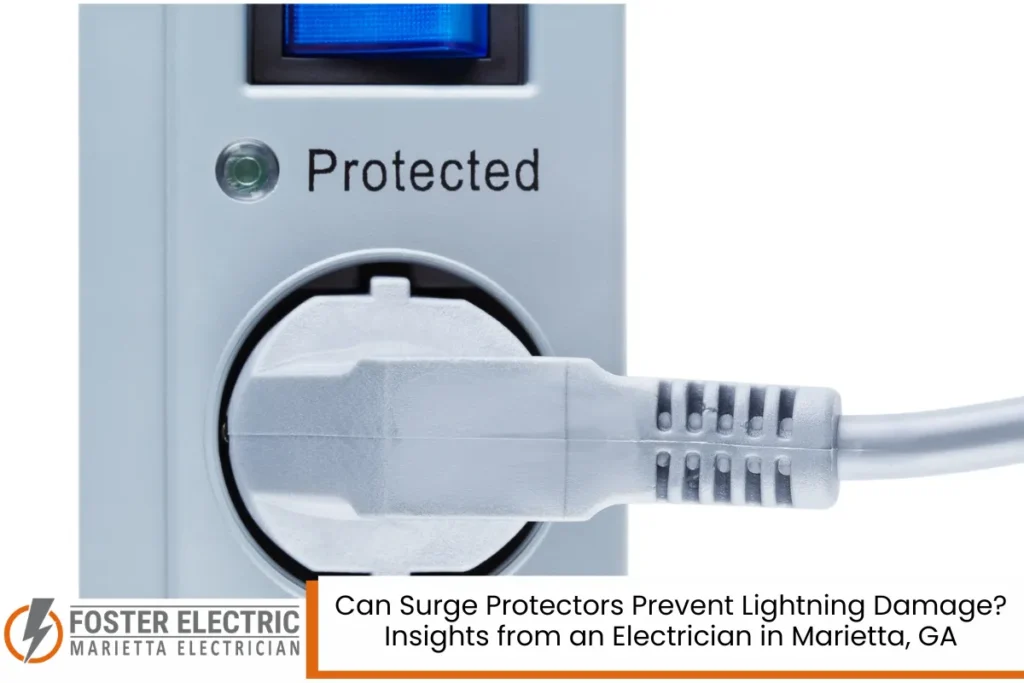
A lighted power strip may continue supplying electricity even after its surge-protection components have failed. Homeowners should therefore distinguish between a “power on” indicator and a separate “protected” status indicator.
Whole-Home Protection and Plug-In Strips Perform Different Jobs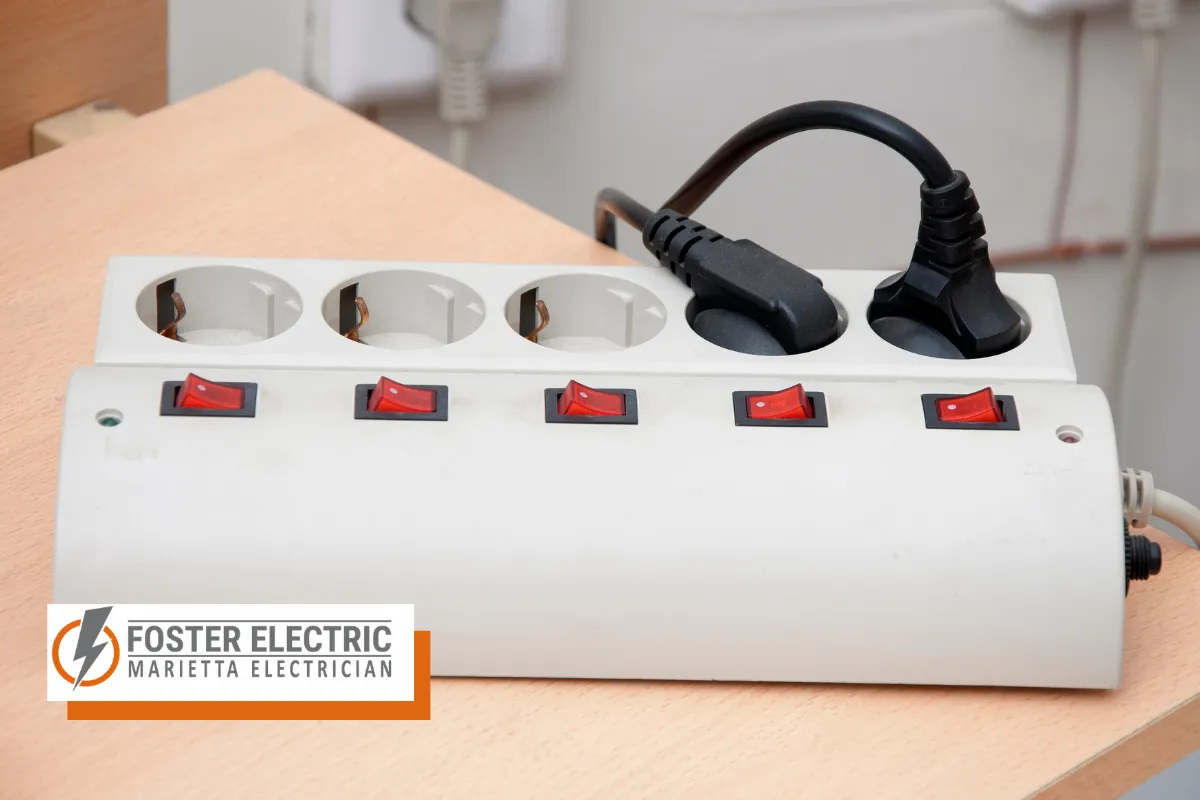
A whole-home SPD and a plug-in surge strip should not be treated as interchangeable products. They operate at different points in the electrical system and provide different layers of defense.
Whole-Home Surge Protective Devices
A whole-home unit is installed at or near the main service equipment or another code-permitted location. Its position allows it to respond before much of an incoming surge spreads through the home’s branch circuits.
Whole-home protection is especially valuable because many expensive appliances cannot be connected to portable power strips. Air-conditioning equipment, ranges, water heaters, built-in ovens, and other permanently connected loads may contain electronic controls but receive no protection from a desk-level strip.
Current residential electrical standards recognize this system-wide risk. NEC provisions require surge protection for services supplying dwelling units, and Georgia has adopted the 2023 National Electrical Code with state amendments as its minimum electrical standard.
The exact application of the code depends on the project, installation date, equipment configuration, and local authority having jurisdiction. An electrical contractor should evaluate the property rather than assume that one installation method fits every panel.
Point-of-Use Surge Protectors
Point-of-use devices are installed close to sensitive equipment. Common examples include plug-in strips, receptacle-type protectors, uninterruptible power supplies, and equipment-specific protection.
These products can help reduce the voltage that remains after a whole-home unit responds. They may also address surges created within the home when motors, compressors, or other loads switch on and off.
Point-of-use devices should be listed for their intended use and connected directly to properly wired receptacles. They should not be daisy-chained, covered, placed where heat cannot dissipate, or used as a substitute for permanent wiring.
Why Layered Protection Is More Effective
A strong residential strategy uses coordinated layers rather than relying on a single device.
The first layer handles larger incoming transients near the service. The second layer limits remaining voltage near vulnerable electronics. Protection should also extend to communication and data paths when appropriate because energy can enter through coaxial, telephone, Ethernet, antenna, or other conductive connections.
This coordinated approach does not eliminate lightning risk. It reduces the number of unprotected pathways and helps keep excessive voltage within the tolerances of connected equipment.
Read How to Tell If Your Surge Protector Is Still Working: Advice from an Electrician in Marietta, GA
Type 1, Type 2, and Type 3 SPDs Explained
Residential SPDs are commonly classified according to where they are intended to be installed.
Type 1 Surge Protective Devices
A Type 1 SPD is designed for installation between the utility side of the service transformer and the line side of the service disconnect, although permitted configurations vary by product and system design. Some can also be installed on the load side when allowed by their listing and instructions.
These devices are intended for service-entrance applications and must be selected carefully because installation may involve energized service conductors.
Type 2 Surge Protective Devices
A Type 2 SPD is generally installed on the load side of the service disconnect. Many products marketed as whole-house surge protectors fall into this category and connect through a dedicated circuit breaker or integrate with compatible service equipment.
Performance depends heavily on conductor routing. Long, looped, or sharply bent leads can increase impedance and reduce the unit’s ability to control transient voltage.
A residential electrician should follow the manufacturer’s instructions, panel requirements, listing limitations, and applicable code provisions.
Type 3 Surge Protective Devices
Type 3 products are typically point-of-use devices installed near protected loads. Examples may include listed surge strips, receptacles, and equipment-level products.
They are most effective as part of a coordinated system rather than as the only defense against an incoming lightning surge.
Type 4 Components
Type 4 components are generally intended for installation as part of other equipment or assemblies. They are not automatically suitable as standalone whole-home devices. Their use depends on how the completed assembly is evaluated and listed.
Homeowners do not need to memorize every classification. They do need a product that is approved for the intended location, compatible with the electrical system, and installed according to its listing.
Ratings That Matter When Selecting Whole-Home Surge Protection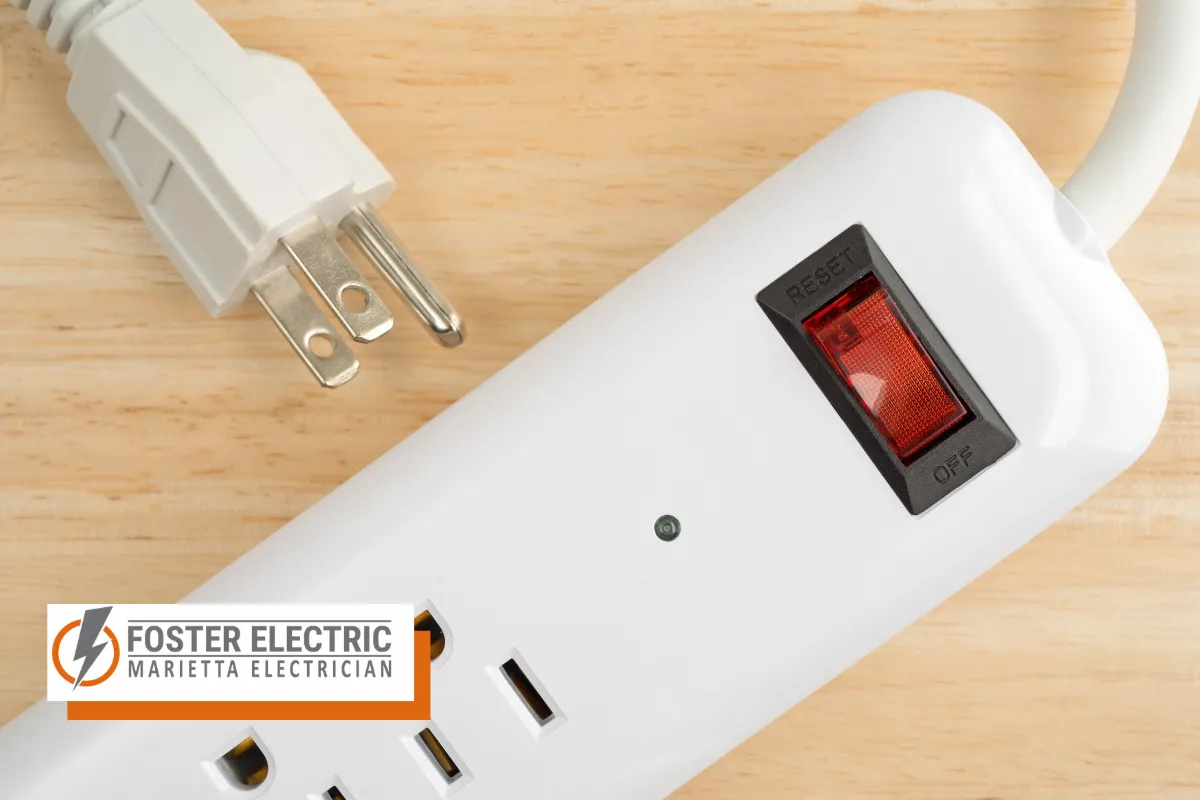
Packaging can make surge protection appear to be a simple contest over the largest number. In reality, no single rating provides a complete picture.
Nominal Discharge Current
Nominal discharge current, shown as In, relates to a device’s ability to withstand standardized surge-current testing. It helps demonstrate the SPD’s durability under defined conditions.
A larger number does not automatically mean a product is best for every home. The device must still match the system voltage, phase configuration, installation location, available fault current, panel design, and manufacturer requirements.
Voltage Protection Rating
Voltage protection rating indicates the measured limiting voltage under standardized testing. In general, a lower value can mean less voltage reaches downstream equipment during the test, but comparisons should be made among products intended for the same system and installation type.
Real-world performance is also affected by lead length and conductor layout.
Maximum Continuous Operating Voltage
The maximum continuous operating voltage establishes how much steady voltage the device can tolerate without beginning to conduct inappropriately. It must be suitable for the electrical system on which the SPD is installed.
An incorrect device may provide inadequate protection, experience premature degradation, or create a safety concern.
Short-Circuit Current Rating
The short-circuit current rating must be adequate for the available fault current at the installation point. This is a system-safety requirement, not merely a performance preference.
Determining available fault current and equipment compatibility may require information that is not visible on the front of the panel. This is one reason hardwired installation should be handled as a professional electrical service.
UL 1449 Listing
A residential SPD should be listed and labeled for its intended purpose. UL 1449 is the principal safety standard associated with surge protective devices.
A recognizable brand name alone is not enough. The specific model, installation method, enclosure, overcurrent protection, and wiring arrangement must comply with its listing and instructions.
Grounding and Bonding Determine Where Surge Energy Goes
A surge protector cannot make electricity disappear. It redirects excess current toward the grounding and bonding system.
The grounding electrode system connects the electrical service to electrodes such as ground rods, concrete-encased electrodes, or other permitted components. Bonding connects conductive parts so dangerous voltage differences are less likely to develop between them.
During a lightning-related event, poor grounding or bonding can limit the effectiveness of surge protection. Loose connections, corrosion, missing electrodes, improper neutral-to-ground connections, and disconnected bonding jumpers can create hazardous conditions.
A local electrician evaluating surge protection may inspect:
- Grounding electrode conductor condition
- Ground rod connections and accessibility
- Service bonding
- Neutral and equipment grounding separation where required
- Bonding of metal water piping
- Panel condition and enclosure integrity
- Evidence of corrosion, overheating, or previous damage
- Compatibility between the SPD and service equipment
- Other conductive systems entering the structure
Adding another ground rod without evaluating the complete system is not a reliable do-it-yourself solution. Separate grounding points that are not correctly bonded can create voltage differences during a surge.
Grounding, bonding, overcurrent protection, and surge protection must function as one coordinated system.
Why a Power Strip Cannot Protect the Entire House
A plug-in surge strip protects only equipment connected to it, and only within the limitations of its design.
It cannot protect hardwired appliances elsewhere in the house. It cannot correct defective grounding. It cannot stop a surge entering through an unprotected coaxial cable. It cannot safely handle unlimited energy from a direct strike.
Some inexpensive products are little more than extension strips with basic suppression components. Others provide meaningful point-of-use protection, but homeowners should check the product label rather than rely on appearance or price.
A suitable strip should include:
- A listing from a recognized testing organization
- A clearly identified surge-protection function
- A protection-status indicator
- Adequate electrical rating for connected equipment
- Enough receptacles to avoid adapters and daisy-chaining
- Instructions explaining replacement and end-of-life behavior
Never connect high-current heating appliances, major appliances, or equipment prohibited by the manufacturer to a portable strip. Overloading or misusing a power strip creates a separate fire risk that surge components cannot prevent.
A Direct Strike Requires More Than an SPD
Whole-home surge protection is not the same as a structural lightning protection system.
A complete lightning protection system is designed to intercept a strike, conduct the current along intended paths, and disperse it into the earth. Depending on the design, it may include air terminals, main conductors, bonding, grounding electrodes, and surge protection for incoming services.
NFPA 780 addresses the installation of lightning protection systems intended to reduce hazards to people and property.
Not every residence requires such a system. Risk can depend on the structure’s height, location, surroundings, roof configuration, construction materials, occupancy, contents, and exposure.
An SPD still plays an important role because a lightning protection system primarily manages the strike’s external path. Surge protection helps control transient voltage entering internal electrical and electronic systems.
Properties with rooftop antennas, extensive outdoor wiring, sensitive home offices, security infrastructure, or unusual exposure may warrant a more detailed assessment.
Signs a Home Needs a Professional Surge-Protection Evaluation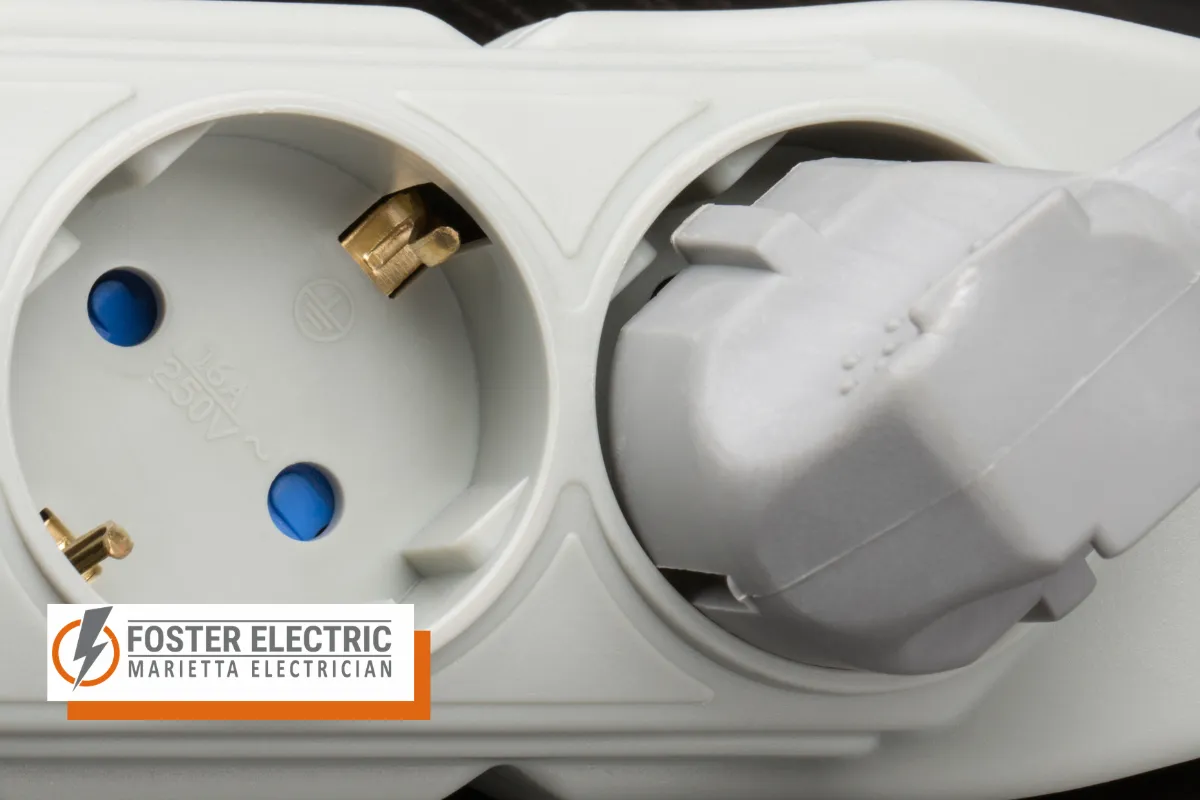
Many homeowners consider surge protection only after equipment has already failed. Earlier evaluation is wise when the electrical system has known vulnerabilities or the property depends heavily on electronics.
Schedule an assessment when:
- The house has no whole-home SPD.
- The main panel has been replaced or the service has been upgraded.
- Electronics fail repeatedly without a clear explanation.
- Lights flicker or appliances reset during storms.
- The grounding electrode system appears damaged or corroded.
- The panel contains rust, heat marks, loose components, or improper modifications.
- The home has solar equipment, a generator, an EV charger, or extensive automation.
- Outdoor circuits serve gates, pumps, lighting, cameras, or detached structures.
- A nearby lightning event caused electrical abnormalities.
- The home has undergone renovations without a documented electrical inspection.
Not every symptom is caused by lightning. Utility voltage problems, loose neutral connections, overloaded circuits, failing breakers, damaged conductors, and appliance defects can produce similar warning signs.
Electricians use inspection and testing to distinguish surge exposure from an active electrical fault.
What to Do After a Nearby Lightning Strike
After a close strike, do not assume the electrical system is safe simply because the lights remain on.
Look and listen for unusual conditions without touching damaged equipment. Warning signs include burning odors, buzzing, repeated breaker trips, discolored receptacles, failed appliances, partial power, sparking, or a panel that feels unusually hot.
If there is smoke, fire, arcing, or an immediate shock hazard, leave the area and contact emergency services. Do not reset breakers repeatedly.
Once conditions are safe:
- Note which appliances and circuits are affected.
- Photograph visible damage.
- Unplug damaged portable equipment when safe to do so.
- Avoid using equipment with burned plugs or cords.
- Contact the utility when service conductors or utility equipment may be involved.
- Arrange an electrical inspection.
- Preserve damaged devices for insurance documentation.
- Review the SPD’s protection-status indicator.
A local electrician may inspect the service, grounding system, panel, breakers, receptacles, and connected equipment. Hidden damage is possible even when the initial symptoms seem minor.
Marietta Permits and Code Compliance for SPD Installation
The City of Marietta states that an electrical permit is required for work performed on electrical systems. Work involving a meter connection or reconnection may also require the city’s safe-to-connect process.
Permit requirements can depend on the property’s jurisdiction, project scope, service configuration, and whether the address lies within city limits or another permitting authority.
Homeowners should not assume that a nearby mailing address automatically establishes the governing jurisdiction.
A qualified electrical contractor can determine whether the proposed work requires:
- An electrical permit
- A service or meter-related permit
- Utility coordination
- Inspection
- Panel modifications
- Approved overcurrent protection
- Equipment labeling
- Updated grounding or bonding
Code compliance matters because an SPD is connected to equipment capable of delivering significant fault current. Improper installation can damage the protector, compromise panel safety, void product protection, or create an arc and fire hazard.
Georgia’s electrical requirements are based on the adopted National Electrical Code and applicable state amendments. Local enforcement and administrative procedures still apply, so every project should be evaluated under the rules in effect when the work is performed.
Questions to Ask Before Approving an Installation
A homeowner does not need to become an electrical-code expert, but asking practical questions can improve the quality of the project.
Ask the residential electrician:
- Which SPD type is appropriate for this service?
- Is the product listed for this panel and installation method?
- Where will it be installed?
- Will the connecting conductors be kept short and direct?
- Does the device provide a visible end-of-life indicator?
- Can a monitoring alarm or remote contact be added?
- Is the available fault current within the equipment rating?
- Does the grounding and bonding system need correction?
- Are data, coaxial, or exterior wiring paths also exposed?
- Will a permit and inspection be required?
- What maintenance or replacement schedule is recommended?
- What product and workmanship warranties apply?
Beware of anyone promising total protection from every lightning strike. A knowledgeable professional should explain limitations, identify unprotected pathways, and recommend a proportional solution.
Practical Ways to Improve Protection Before the Next Storm
Whole-home surge protection works best as part of a broader electrical-safety plan.
Install Coordinated Surge Protection
Use a properly selected whole-home SPD and listed point-of-use protection for sensitive electronics. Devices should be matched to the electrical system rather than selected solely by advertising claims.
Inspect Grounding and Bonding
Have damaged, corroded, incomplete, or improperly connected grounding components corrected. Good surge performance depends on a low-impedance path and effective bonding.
Protect Every Conductive Entry Path
Consider power, coaxial cable, telephone, data, antenna, gate wiring, landscape circuits, and feeds to detached structures. Protection on one pathway does not control energy arriving through another.
Replace Failed or Aged Devices
Check status indicators periodically and after severe storms. Replace an SPD when its manufacturer indicates that protection has been lost.
Avoid Last-Minute Unplugging
Unplugging equipment before a storm can isolate it from electrical and communication conductors, but do not handle plugs, cords, or electrical equipment after a thunderstorm has arrived. Indoor lightning guidance advises avoiding electrical equipment during the storm.
Maintain an Equipment Inventory
Record model numbers, serial numbers, purchase dates, photographs, and receipts for major appliances and electronics. This documentation can help with warranty or insurance claims after a damaging event.
The Best Protection Is a Layered Electrical Strategy
Surge protectors can prevent a meaningful amount of lightning-related damage, particularly when a nearby strike or utility disturbance sends transient voltage toward a home. A whole-home SPD provides broader coverage than a portable strip, while point-of-use protection adds another defensive layer near sensitive equipment.
Neither option guarantees survival during a direct strike.
The most reliable approach combines properly installed surge protective devices, sound grounding, correct bonding, protected communication lines, safe electrical equipment, and professional inspection. Some properties may also benefit from a dedicated lightning protection system.
For Marietta homeowners, the goal should not be finding one device advertised as “lightning-proof.” It should be creating a coordinated system that gives dangerous energy a controlled path while reducing the voltage reaching appliances and electronics. A qualified electrical contractor can evaluate the service, explain realistic limitations, and install protection that complies with current requirements.
Electrician in Marietta, GA – Foster Electric
At Foster Electric, we help Marietta homeowners protect valuable appliances and electronics with professionally evaluated surge-protection solutions. Our electrician can inspect your panel, grounding, bonding, and service equipment before recommending a whole-home SPD suited to your electrical system. We also identify unsafe wiring, installation limitations, and unprotected circuits that a basic power strip cannot address. As a trusted local electrical service provider, we focus on safe workmanship, clear recommendations, and code-compliant results for homes throughout Marietta, Georgia, and prominent surrounding areas. Do not wait until the next thunderstorm exposes a weakness in your system. Call Foster Electric at (404) 855-4797 or fill out our contact form to request an inspection and discuss practical protection for your home.
Frequently Asked Questions
Can renters use surge protection without changing the electrical panel?
Renters can use listed point-of-use surge protectors for computers, televisions, routers, and similar electronics, provided the lease and product instructions permit them. A renter should never remove a panel cover, alter fixed wiring, replace a receptacle, or install a hardwired SPD without authorization. Ask the property owner or manager whether the building already has whole-home protection and when the electrical system was last inspected. Report loose receptacles, scorch marks, frequent breaker trips, or missing grounding rather than trying to correct them. For broader protection, the owner can arrange an assessment and approve permanent work through a qualified electrical contractor.
Does homeowners insurance always cover lightning and surge damage?
Coverage varies by policy, cause of loss, deductible, exclusions, and the type of damaged property. Many policies provide some coverage for lightning-related damage, but that does not mean every appliance failure after a storm will automatically be reimbursed. Insurers may request evidence showing when the damage occurred and whether the appliance failed because of a covered event, wear, or an unrelated defect. Keep photographs, purchase records, model numbers, repair findings, and a written electrical inspection report. Contact the insurer promptly before disposing of damaged equipment. Surge protection remains worthwhile because preventing damage is generally easier than proving and processing a claim.
Will whole-home surge protection interfere with a standby generator?
A compatible SPD should not interfere with normal generator operation when it is selected and installed correctly. However, generator systems introduce additional equipment, switching arrangements, grounding considerations, and possible surge pathways. The SPD’s location may depend on whether the property uses an automatic transfer switch, service-rated disconnect, separate distribution equipment, or another approved configuration. Generator output characteristics and manufacturer instructions must also be considered. An electrician should evaluate the complete system rather than adding a protector at the most convenient breaker space. Coordinated protection may be needed on utility-supplied circuits, generator-fed equipment, communication lines, and sensitive controls within the generator and transfer equipment.
Do homes with solar panels need specialized surge protection?
Solar installations contain direct-current and alternating-current conductors, inverters, rapid-shutdown equipment, communications components, and rooftop wiring that may be exposed to induced surges. Protection designed only for the home’s standard AC panel may not address every pathway associated with the solar array. Any additional SPD must be listed for the applicable voltage, current type, polarity, and installation location. It must also comply with the solar equipment manufacturer’s instructions. Homeowners should ask the solar installer and electrical contractor how surge protection is coordinated across the array, inverter, disconnects, service equipment, monitoring system, and grounding network before modifying an existing photovoltaic system.
Should an SPD be replaced after every major thunderstorm?
Not automatically. Replacement depends on the device’s condition, status indication, manufacturer guidance, and the severity of the event. Many whole-home products are designed to withstand multiple surges, but their protective components gradually wear down. After a nearby strike or unexplained equipment failure, check the SPD’s indicator without opening the panel. A missing light, warning signal, fault display, or damaged enclosure may mean protection has been compromised. Because some devices continue passing power after surge protection is exhausted, normal electricity does not confirm that the unit still works. Arrange professional evaluation when the indicator changes, damage is visible, or the manufacturer specifies replacement.
Disclaimer: This article provides general electrical-safety information, not project-specific code or engineering advice. Permit rules and system conditions vary. Have a qualified professional evaluate your property before installing, modifying, or servicing electrical equipment.
Read Can a Licensed Marietta Electrician Wire Your Detached Garage or Shed?