An electrician will tell you that a surge protector can keep supplying power even after its protective components have stopped working. That creates a serious problem: your television, computer, appliances, and smart-home equipment may appear protected when they are actually connected to little more than an ordinary power strip. A nearby lightning event, utility disturbance, or voltage spike could then damage several devices at once. Fortunately, you can often spot a failing unit by checking its protection indicator, examining the housing and cord, reviewing its surge history, and following the manufacturer’s instructions. This guide explains the warning signs, safe inspection steps, replacement considerations, and situations that call for professional help, so you can determine whether your current protection remains dependable.
The Most Important Sign Is the Protection Status Light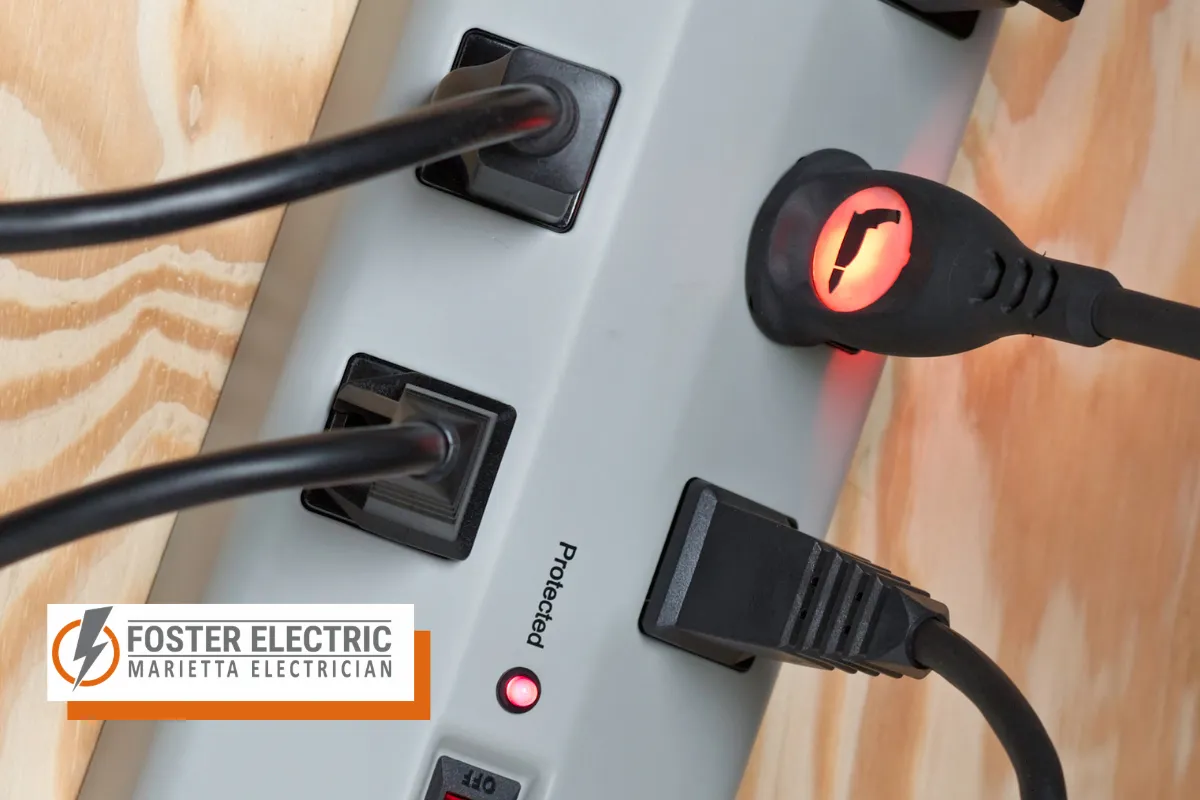
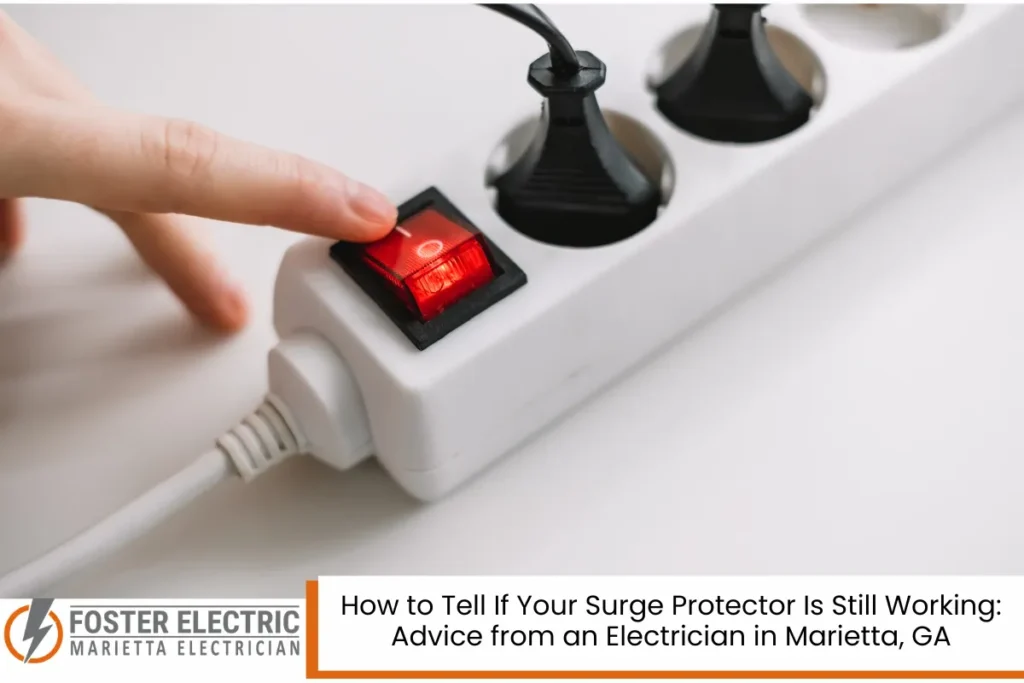
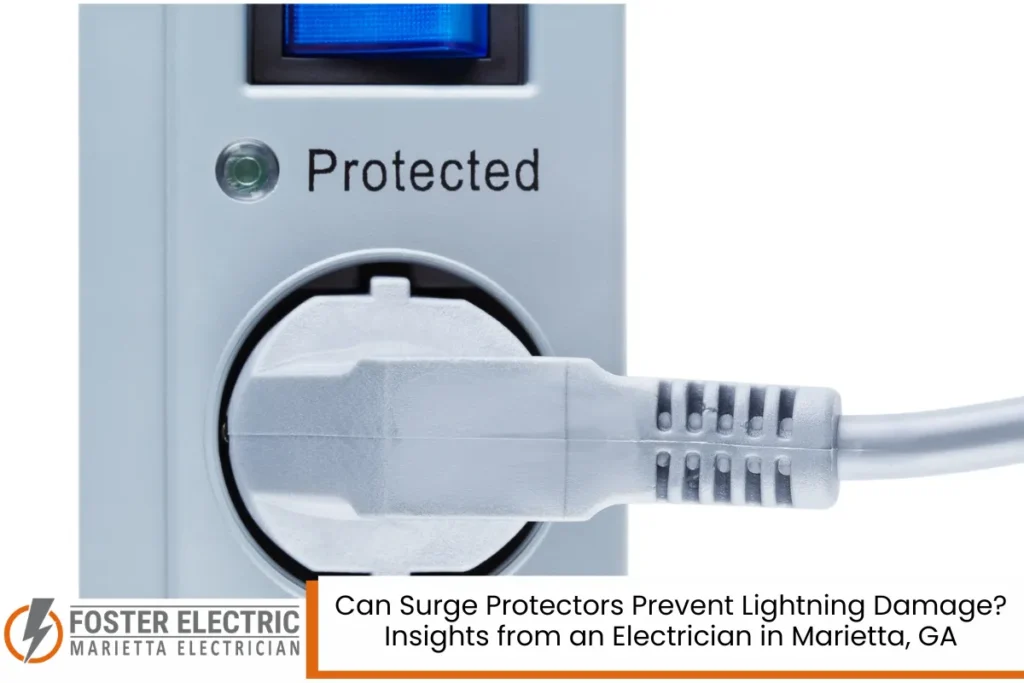
Most plug-in surge protectors have one or more indicator lights. These lights may be labeled “Protected,” “Protection,” “Surge,” “Grounded,” “Wiring,” or something similar.
On many models, an illuminated protection light means the internal surge-suppression components are still functioning. When that light turns off, changes color, or begins flashing, the unit may no longer be capable of limiting voltage spikes. Manufacturer designs vary, however, so you should check the markings on the device and consult its manual before interpreting the light.
A surge protector may have several separate indicators:
- A power light showing that electricity is reaching the outlets
- A protection light reporting the status of the surge-suppression circuit
- A grounded light showing whether the receptacle appears properly grounded
- A wiring-fault light warning of a possible outlet or circuit problem
- An overload or circuit-breaker indicator
Do not assume the device is protecting your equipment just because its outlets still work. The power switch and receptacles can remain operational after the internal surge-protection components have been depleted. Industry guidance advises replacing a unit when its protection indicator turns off or the product shows physical damage.
Why the Power Light Is Not Enough
A power light usually confirms only that the surge protector is receiving electricity. It does not necessarily verify that the protective components remain healthy.
This distinction matters because many surge protectors use metal oxide varistors, commonly called MOVs, to divert excess voltage. MOVs absorb or redirect surge energy, but repeated electrical stress can degrade them. Once their protective capacity has been exhausted, the strip may continue delivering normal household power.
Think of the device as having two functions:
- Distributing power to several receptacles
- Suppressing short-duration overvoltage events
The first function may continue after the second has failed. That is why the dedicated protection indicator—not simply the illuminated on/off switch—is the more meaningful signal.
What a Grounded or Wiring-Fault Light Tells You
A grounded indicator is not the same as a protection indicator. It generally reports whether the surge protector detects a grounding path at the receptacle. A wiring-fault light may signal reversed polarity, an open ground, or another condition identified by the product’s internal monitoring circuit.
These lights are useful screening tools, but they are not a complete diagnosis of the branch circuit. A plug-in device cannot uncover every wiring defect hidden behind the wall.
Contact a local electrician when a grounded light unexpectedly turns off, a wiring-fault indicator appears, or several surge protectors show the same warning in one part of the home. The problem may involve the receptacle, grounding system, neutral connection, or branch-circuit wiring rather than the surge protector itself.
A Safe Seven-Step Check for a Plug-In Surge Protector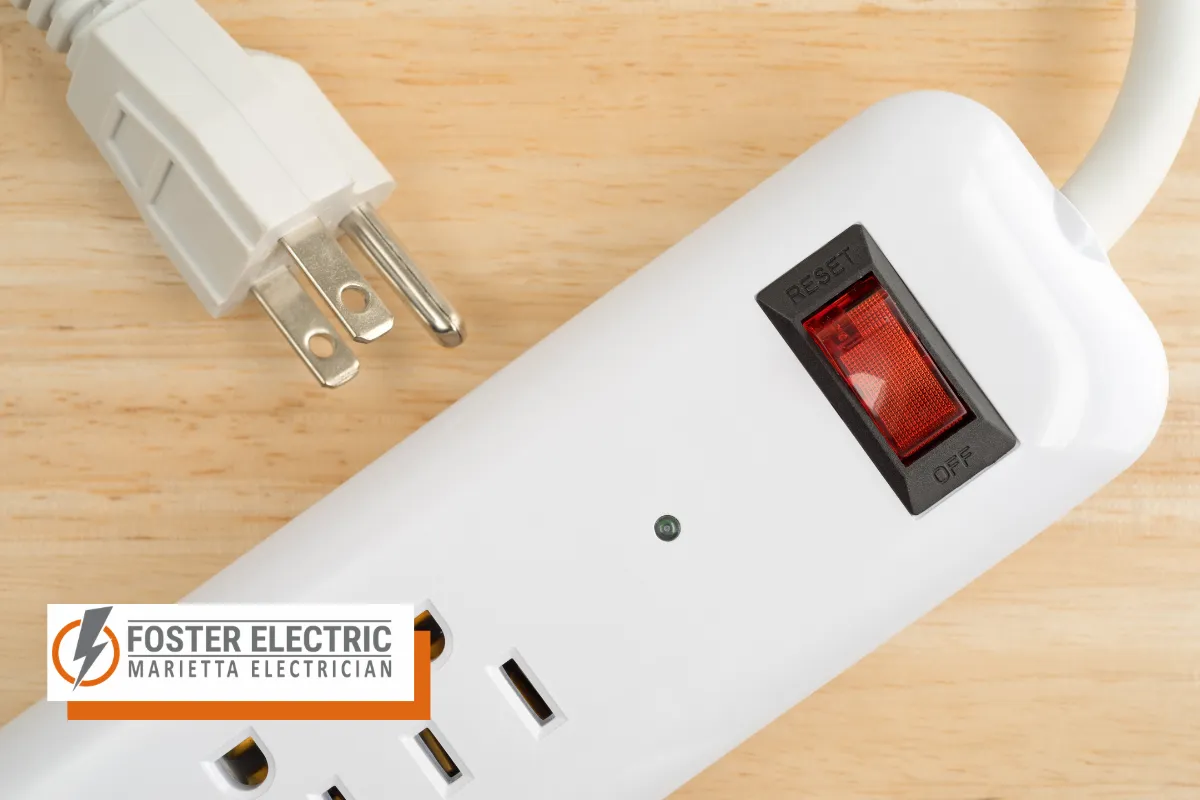
You do not need to dismantle the product to perform a basic inspection. In fact, opening a plug-in surge protector is unsafe and may expose you to energized components.
Use the following process instead.
1. Read Every Label on the Device
Look for labels near the switch, indicator lights, cord, underside, and outlet bank. Manufacturers use different colors and terminology, so never assume that green, red, or amber has the same meaning on every model.
Check for:
- Protected or surge-status labels
- Grounding or wiring-fault indicators
- Electrical ratings
- Model and serial numbers
- Certification markings
- Maximum load information
- Replacement warnings
- Manufacturing date codes, when provided
The product instructions should explain what each light means. When the manual is missing, search the manufacturer’s documentation using the exact model number rather than relying on advice for a visually similar product.
2. Confirm That the Protection Indicator Is Normal
Plug the protector directly into a properly installed wall receptacle and turn it on. Compare the lights with the manufacturer’s normal operating description.
Replace the product when the instructions state that an unlit, red, or flashing indicator means protection has been lost. Do not try to reset a failed surge-status light unless the manufacturer specifically describes a reset procedure.
Some units include an automatic shutoff feature that disconnects the outlets when the surge-protection circuit reaches the end of its useful life. That design prevents the protector from silently operating as an ordinary strip. Other models continue supplying electricity, making regular visual checks especially important.
3. Examine the Housing Without Taking It Apart
Unplug the unit before conducting a physical inspection. Look at every side under good lighting.
Remove the surge protector from service if you find:
- Melted or warped plastic
- Brown or black discoloration
- Cracks in the housing
- Loose or recessed receptacles
- Exposed internal material
- Buzzing or crackling sounds
- A burnt odor
- Soot or scorch marks
- Signs of moisture entry
- A switch that feels loose or unusually hot
Discoloration, cracking, and melting are recognized warning signs that replacement is necessary.
Never continue using a damaged strip simply because the connected equipment still turns on. Heat damage can indicate an overloaded connection, deteriorated contact, loose internal component, or previous fault.
4. Inspect the Plug and Entire Cord
Run your eyes and hands along the unplugged cord without bending it aggressively. The insulation should be smooth, intact, and flexible.
Replace the protector if you notice:
- Fraying
- Cuts or punctures
- Brittle insulation
- Flattened sections
- Exposed conductors
- A loose grounding pin
- Bent or burned plug blades
- Damage where the cord enters the housing
- A plug that fits loosely in the receptacle
Safety guidance does not assign every power strip a universal expiration date, but it does recommend periodic inspection and disposal when the cord or enclosure is damaged.
Do not repair a damaged cord with electrical tape. A taped covering does not restore the original insulation, strain relief, conductor integrity, or product listing.
5. Check for Abnormal Heat During Normal Use
A surge protector may feel slightly warm when supplying several electronic devices, but it should not become uncomfortably hot. Heat around one outlet, the plug, the cord connection, or the on/off switch deserves attention.
Unplug the unit immediately when you smell burning, hear sizzling, see smoke, or find severe heat. Avoid touching melted areas.
Abnormal temperature can result from:
- Loose plug-to-receptacle contact
- Worn internal connections
- Excessive current
- Damaged receptacle contacts
- A high-wattage appliance
- A defective product
- Another strip or extension cord connected in series
A residential electrician should examine the wall receptacle when it is discolored, loose, cracked, or hot. Replacing the surge protector alone may not correct a damaged outlet or branch-circuit problem.
6. Review Recent Electrical Events
Consider what the unit has experienced. A large surge, nearby lightning event, repeated outages, or restoration after a utility interruption can stress protective components.
You may not know the exact energy that reached the device, and there is no reliable household test that measures the remaining capacity of its internal MOVs. The absence of visible damage also does not prove that the protector is fully functional.
Replacement is a sensible precaution when:
- The protection light changed after a storm
- Connected equipment was damaged
- The device tripped repeatedly during an electrical event
- The housing developed an odor or discoloration
- The manufacturer recommends replacement after a significant surge
- You cannot determine whether the status indicator is working
- The unit has an uncertain history from a previous owner
A dramatic lightning strike is not the only possible source of a transient overvoltage. Switching operations, motors, compressors, power restoration, and changes within an electrical system can also produce short disturbances.
7. Verify That the Product Has Not Been Recalled
Locate the manufacturer, model number, and other identifying information. Compare those details with current product-safety recall information.
Recalls have involved power strips with inadequate overcurrent protection, undersized conductors, loose connections, and improper grounding. Those defects can create fire, shock, or electrocution hazards.
Stop using a recalled product and follow the official remedy. Do not give it away, sell it, or move it to a less important room.
What You Cannot Prove With a Simple Outlet Test
A receptacle tester can provide useful information, but it cannot certify the remaining surge capacity of a plug-in protector.
Similarly, plugging in a lamp proves only that electricity is reaching an outlet. Pressing the reset switch may restore power after an overload, but it does not necessarily restore depleted surge-suppression components.
A household multimeter is also not an appropriate tool for determining whether an MOV still has its original clamping performance. Meaningful surge testing requires specialized equipment and controlled high-voltage impulses. Attempting improvised tests can damage the product, create an arc, or expose the user to dangerous voltage.
For homeowners, the practical evaluation is based on:
- The dedicated protection indicator
- Manufacturer instructions
- Physical condition
- Product history
- Recall status
- Correct application
- The condition of the wall receptacle
When those checks leave uncertainty, replacement is usually more reasonable than attempting to validate an inexpensive plug-in product through laboratory-style testing.
Warning Signs That Mean “Replace It Now”
Some conditions leave little room for debate. Disconnect the surge protector and replace it when any of the following occurs.
The Protection Light Has Failed
When the manufacturer says the protection indicator must remain illuminated and it is no longer on, the unit has reached the end of its protective function or detected an abnormal condition.
Do not confuse this with a burned-out cosmetic light unless the manufacturer confirms that interpretation. Treat an unexplained status change as a failed device.
There Is Melting, Scorching, or a Burnt Smell
Heat damage can signal a poor electrical connection or an overload. Continuing to use the protector may worsen the condition and increase fire risk.
The wall outlet should also be examined if the plug blades are discolored or the receptacle face shows heat damage.
The Cord or Plug Is Damaged
A compromised cord can expose energized conductors or create a high-resistance connection. Replace the entire product rather than splicing or taping the damaged section.
The Outlets No Longer Grip Plugs Securely
Plugs should fit firmly. Loose contacts can produce heat and intermittent operation. If a device plug falls out easily or moves excessively, retire the strip.
It Makes Noise Under Normal Operation
Buzzing, popping, crackling, or sizzling is not normal. Unplug the protector when safe to do so and keep it out of service.
Connected Equipment Was Damaged During a Surge
Damage to one or more connected devices may indicate that the event exceeded the protector’s capability or that the protective components failed. Replace the unit even if its power light remains on, and consider having the electrical system assessed before reconnecting sensitive equipment.
A Power Strip and a Surge Protector Are Not the Same Product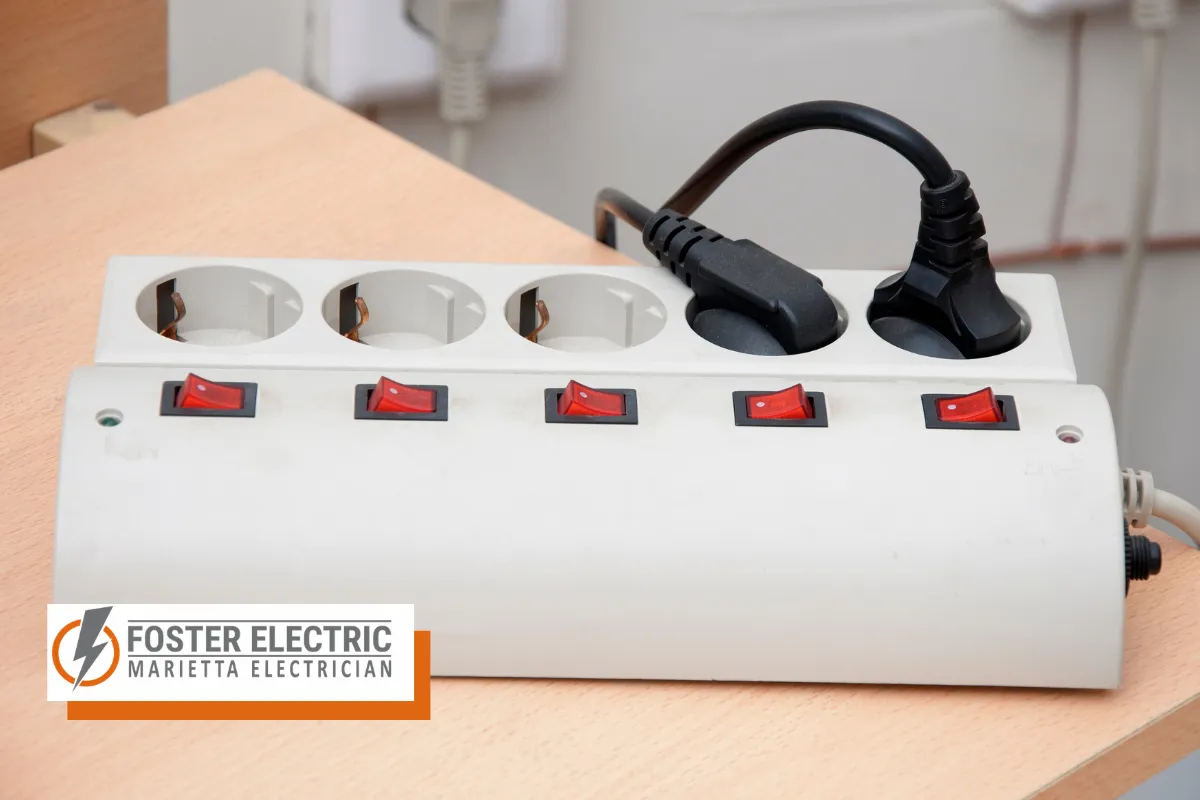
A basic power strip provides additional receptacles. A surge protector adds circuitry intended to limit transient overvoltage.
The products can look nearly identical, so check the label rather than relying on appearance, packaging colors, or the presence of an on/off switch. A resettable circuit breaker provides overload protection for the strip; it does not automatically mean the product offers surge suppression.
Look for clear surge-protection specifications, certification to an applicable safety standard, and a protected-status indicator. Cord-connected surge protective devices for general household applications are commonly evaluated under UL 1449.
Important product specifications may include:
- Voltage protection rating, or VPR
- Nominal discharge current
- Surge-current rating
- Maximum continuous operating voltage
- Joule rating on some plug-in models
- Connected-equipment warranty terms
- Response and status features
- UL 1449 listing information
These ratings should be considered together. A large marketing number alone does not guarantee that a protector is appropriate for every application.
How Surge Protection Gradually Loses Capacity
Surge suppression is not unlimited. Many devices rely on components that respond when voltage rises above a designed threshold. Each meaningful event can place stress on those components.
A protector may absorb numerous small transients, one severe event, or a combination of both. The remaining service life therefore depends on electrical conditions rather than age alone.
Factors that can affect longevity include:
- Frequency and intensity of voltage transients
- Product design and component quality
- Correct voltage application
- Grounding and bonding conditions
- Ambient heat
- Moisture exposure
- Electrical-system faults
- Loads connected to the device
- Previous lightning or utility events
This is why there is no universal rule stating that every surge protector fails after exactly three, five, or ten years. Age can support a replacement decision, especially when the history is unknown, but the status light and physical condition are more direct indicators.
Read Can Surge Protectors Prevent Lightning Damage? Insights from an Electrician in Marietta, GA
Why Joule Ratings Do Not Create a Countdown Clock
A joule rating is often presented as the amount of surge energy a device can absorb under specified conditions. It does not function like a visible fuel gauge.
Homeowners usually cannot determine how many joules each past transient imposed on the device. Events also differ in waveform, duration, current, voltage, and path. Therefore, dividing the printed rating by an estimated number of storms does not provide a trustworthy remaining-life calculation.
Use the rating to compare properly certified products within a suitable category, not to predict an exact failure date.
Common Mistakes That Can Defeat Safe Protection
Even a functioning surge protector can be used incorrectly.
Connecting One Strip to Another
Daisy-chaining means plugging one power strip or surge protector into another. This arrangement can overload the upstream product, create cluttered connections, and lead users to exceed the intended electrical load.
Plug each unit directly into a permanent wall receptacle unless the manufacturer expressly allows another configuration.
Running High-Wattage Appliances Through a Strip
Portable heaters, cooking appliances, air-conditioning equipment, and other high-demand loads generally should not be connected to ordinary power strips. Follow the appliance instructions and use a properly rated permanent receptacle.
The issue is not merely surge protection. Sustained current can overheat a strip, plug, or loose receptacle connection.
Placing the Unit Under Rugs or Furniture
Covering a cord can trap heat and conceal damage. Furniture legs can crush the insulation, while foot traffic may loosen the plug or strain the cord.
Keep the product visible, dry, ventilated, and protected from physical damage.
Using an Indoor Product Outdoors
Indoor surge protectors are not designed for rain, condensation, soil, or prolonged outdoor exposure. Use equipment specifically listed and rated for its environment.
Ignoring an Ungrounded Receptacle
Many plug-in protectors depend on a properly wired grounding path for their intended operation. Never remove the grounding pin or use an adapter to bypass it.
When a grounded-status indicator reports a problem, have the receptacle evaluated instead of trying different adapters.
Treating Surge Protection as Overload Protection
A surge protector addresses short-duration voltage events. Its circuit breaker may also respond to excessive current, but neither feature replaces properly sized branch-circuit conductors, breakers, grounding, or safe load management.
Surge protection also does not perform the same function as a ground-fault circuit interrupter or arc-fault circuit interrupter.
Plug-In Protection Works Best as Part of a Layered Plan
A point-of-use protector helps defend the equipment connected to it, but it does not cover every circuit or appliance in the house.
Whole-home surge protective devices are installed at or near electrical service or distribution equipment. Depending on their type and configuration, they help limit transients entering or moving through the home’s electrical system.
The 2020 National Electrical Code added a requirement for Type 1 or Type 2 surge protection for dwelling-unit services, including when qualifying service equipment is replaced. The adopted and enforced code edition can depend on the applicable jurisdiction and project date, so local requirements should be confirmed before work begins.
A layered approach may include:
- A properly selected whole-home surge protective device
- Plug-in protection for sensitive electronics
- Protection for communication, data, or coaxial lines when appropriate
- Effective grounding and bonding
- Correctly wired receptacles
- Dedicated or suitable circuits for major equipment
- Uninterruptible power supplies for devices that also need temporary backup power
Whole-home protection reduces risk, but it does not make point-of-use protection unnecessary in every situation. The two methods can complement each other.
Type 1, Type 2, and Type 3 Devices
Surge protective devices are categorized partly by where they may be installed.
- Type 1 devices can be installed in designated locations on the supply side or load side of the service disconnect, subject to their listing and installation instructions.
- Type 2 devices are generally installed on the load side of service equipment, often at a panelboard.
- Type 3 devices include point-of-use products installed farther downstream, such as certain cord-connected surge protectors.
Product selection involves more than choosing a type number. The electrical contractor must account for the system voltage, available fault current, panel configuration, conductor routing, overcurrent protection, manufacturer requirements, and applicable code.
Short connection paths are particularly important because excessive conductor length can reduce the installed performance of a panel-mounted SPD.
When a Panel-Mounted Surge Protector Needs Attention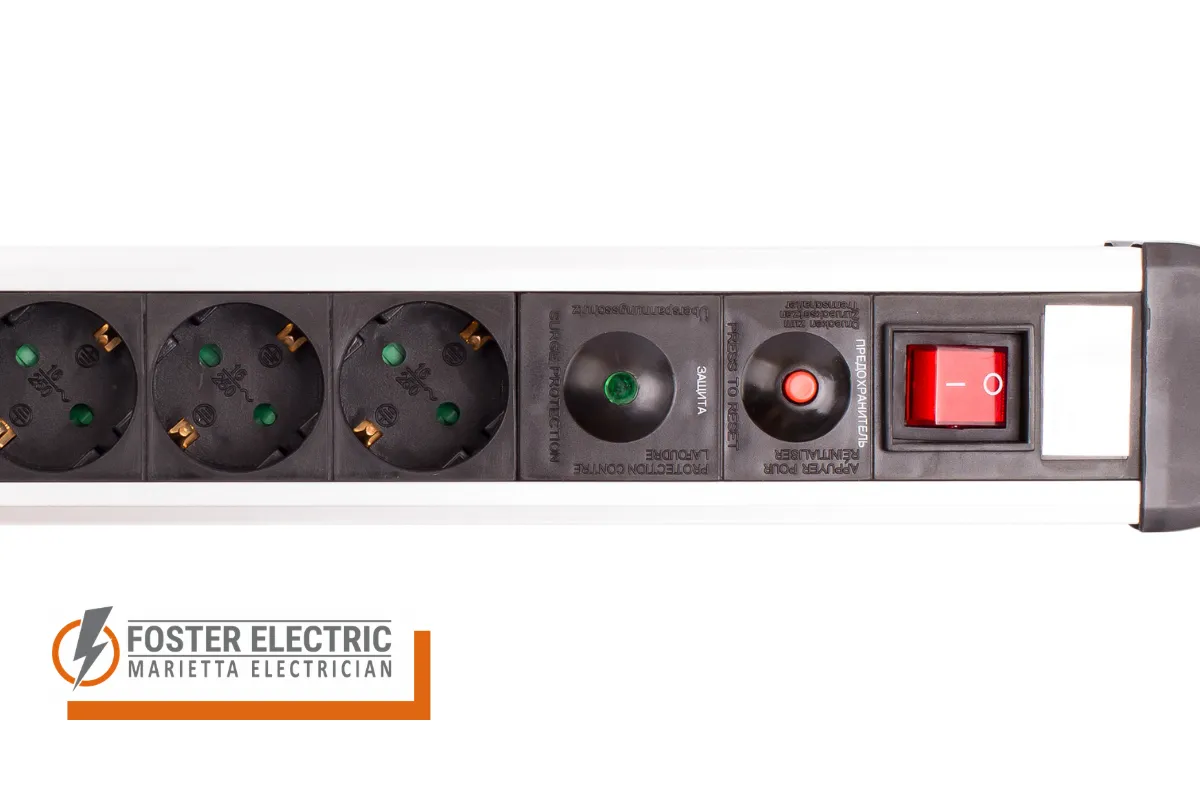
Whole-home units often include LED status indicators. Some models use one light for each protected mode or phase, while others include an audible alarm or remote contact.
The exact indicator pattern matters. On certain products, green means normal protection and red means replacement. Other models may use a different arrangement, so the label and manual remain the controlling instructions.
Call for electrical service when:
- One or more status lights are off
- A replacement indicator is illuminated
- The device emits an alarm
- The SPD breaker will not remain on
- The enclosure shows heat damage
- The panel has experienced water intrusion
- A significant electrical event occurred
- The manufacturer calls for module replacement
- The indicator cannot be seen or interpreted safely
Do not remove the panel cover to inspect wiring. Energized service and panel components can remain hazardous even when certain breakers are switched off.
A qualified electrical contractor can verify the device status, inspect connections, identify compatible replacement equipment, and determine whether additional problems contributed to the failure.
Marietta Permit and Licensing Considerations
Electrical work must follow the requirements of the authority having jurisdiction for the property. Within the City of Marietta, official guidance states that an electrical permit is required for work performed on electrical systems. Work involving a meter connection or reconnection is subject to additional safe-to-connect procedures and inspection requirements.
The correct permitting authority may depend on the property’s actual jurisdiction rather than its mailing address. A Marietta postal address does not by itself establish that a home is within city limits.
Plugging a listed, cord-connected surge protector into a suitable receptacle is different from altering fixed wiring. Installing a panel-mounted SPD, replacing service equipment, modifying circuits, or repairing a damaged receptacle can involve permits, inspections, equipment compatibility, and shock or arc-flash hazards.
Georgia regulates electrical contractors through the state licensing board. State law recognizes separate Class I and Class II electrical contractor licenses, with Class I subject to restrictions on the types of structures and installations covered.
Before hiring someone for fixed electrical work, verify appropriate licensing and ask how required permits and inspections will be handled.
When the Problem May Be Your Home’s Electrical System
Repeated surge-protector failures should not be dismissed as bad luck. They may point to another electrical condition.
Request professional evaluation when you notice:
- Lights repeatedly brightening and dimming
- Several devices failing in a short period
- Frequent breaker trips
- Warm or discolored receptacles
- Buzzing in the panel
- A burning smell
- Flickering across multiple circuits
- Appliances behaving erratically
- Tingling from metal equipment
- Grounded lights changing at several outlets
- Damage following a storm or power restoration
Some symptoms may involve loose connections, damaged service conductors, grounding or bonding deficiencies, overloaded circuits, voltage irregularities, or utility-side conditions.
Do not repeatedly replace surge strips without investigating a recurring pattern. A new protector may also be damaged if the underlying fault remains.
Stop and Call Immediately for These Conditions
Keep clear of the equipment and seek urgent professional assistance when there is smoke, active arcing, severe burning odor, visible melting, water inside electrical equipment, or a panel that is hot to the touch.
Call emergency services when there is a fire or immediate danger. Do not use water on energized electrical equipment.
Choosing a Replacement That Fits the Application
Once a surge protector has failed, replace it with a properly certified product that suits the connected equipment and environment.
Consider the following characteristics:
A Clear Protection-Failure Indicator
Choose a model that distinctly reports whether surge protection remains active. Automatic shutoff at end of life can provide an additional safeguard by preventing continued use without protection.
Adequate Outlet Spacing
Large adapters should fit without forcing plugs sideways or blocking required ventilation.
A Suitable Cord Length
Use the shortest practical cord that reaches the permanent receptacle without tension. Do not coil excess cord tightly or place it beneath rugs.
Appropriate Load Ratings
Confirm the voltage, current, and wattage limits. Add the expected loads rather than assuming that every available outlet can support a high-wattage device at the same time.
Applicable Certification
Look for a recognized certification mark and surge-protection labeling appropriate for the product category. Avoid products with missing manufacturer information, vague ratings, or unsupported safety claims.
Protection for Relevant Signal Lines
Electrical power is not the only path a transient may follow. When sensitive equipment connects to coaxial, telephone, Ethernet, antenna, or other conductive lines, consider coordinated protection designed for those connections. Maintain compatibility with data speed, grounding, and system requirements.
No Unnecessary Features That Encourage Overloading
A large outlet count does not increase the capacity of the branch circuit. Select a practical layout, and keep continuous and total loads within the ratings of the product and circuit.
A Simple Inspection Schedule for Marietta Homes
Make surge-protector checks part of routine home maintenance.
A practical schedule is to inspect:
- After a significant storm or nearby lightning activity
- After an unexplained outage or voltage disturbance
- After connected equipment fails
- When rearranging a home office or entertainment system
- When moving into a home with existing protectors
- During seasonal smoke-alarm and safety checks
- Whenever an indicator changes
- Whenever a cord, plug, or receptacle feels unusually warm
Record the purchase date and keep the manual or a photo of the label. For panel-mounted equipment, note the model and installation date without removing the panel cover.
This documentation makes it easier for electricians to identify replacement parts and evaluate whether failures are happening unusually often.
The Practical Answer: Trust the Indicator, Inspect the Condition, and Replace When Unsure
The fastest way to determine whether a surge protector is still working is to locate its dedicated protection-status indicator and compare it with the manufacturer’s instructions. Then inspect the unplugged housing, cord, plug, and receptacles for heat, wear, looseness, or physical damage.
Replace the unit when its protection light reports failure, its condition is questionable, it has been recalled, or it may have absorbed a major event. Do not assume that working outlets mean active surge suppression.
For stronger coverage, consider combining listed point-of-use products with professionally installed whole-home protection. When indicators behave unexpectedly, protectors fail repeatedly, or the receptacle and panel show warning signs, arrange an inspection instead of guessing. Sound surge protection begins with a healthy device, but it also depends on safe wiring, effective grounding and bonding, suitable overcurrent protection, and code-compliant installation.
Electrician in Marietta, GA – Foster Electric
At Foster Electric, we help homeowners determine whether aging surge protectors, damaged receptacles, or panel-related concerns are putting valuable electronics at risk. Our team provides dependable electrical service throughout Marietta, Georgia, and prominent surrounding areas. We can inspect suspicious outlets, evaluate grounding and wiring conditions, and recommend properly selected whole-home surge protection when appropriate. When you need an electrician who prioritizes safety, clear communication, and code-compliant workmanship, we are ready to help. Do not ignore failed indicator lights, scorched plugs, repeated equipment damage, or unexplained electrical behavior. Call Foster Electric at (404) 855-4797 or fill out our contact form to schedule an assessment. We will help you choose a practical solution for your home and complete the work with professional care.
Frequently Asked Questions
Can a surge protector’s indicator light fail even when the protective circuit still works?
An indicator lamp or LED can theoretically fail independently of the surge-suppression circuit. However, homeowners usually have no safe, reliable way to confirm that this is the only problem. If the manufacturer specifies that the light indicates active protection, an unlit indicator should be treated as a warning that the unit needs replacement. Do not open the housing or attempt to bypass the indicator. Check the manual, confirm that the receptacle supplies power, and test the protector in another known-good receptacle only when doing so is safe. For a panel-mounted unit, ask a professional to diagnose the indicator because internal inspection can expose energized components.
Will unplugging electronics during a storm provide better protection than a surge protector?
Physical disconnection can isolate equipment from the power wiring, but it must be completed well before dangerous storm conditions arrive. Do not handle cords, plugs, electrical equipment, or communication cables while lightning is nearby. Equipment may also remain connected through coaxial, telephone, Ethernet, antenna, or other conductive paths. Routine unplugging is not practical for refrigerators, security systems, hardwired appliances, or smart-home equipment. A better long-term strategy is coordinated protection that addresses the electrical service and sensitive point-of-use devices. Proper grounding and bonding are also important. No consumer surge protector should be described as a guarantee against every possible lightning event.
Does a battery backup provide surge protection automatically?
Some uninterruptible power supplies include surge suppression, but battery backup and surge protection are separate functions. The battery supplies temporary power during an outage and may regulate certain voltage conditions. Surge suppression limits short transient overvoltages. Check the product’s specifications, certification, protected-outlet labels, and status indicators instead of assuming every outlet has both capabilities. Some battery-backup units provide full backup and surge protection on selected receptacles while other outlets receive surge protection only. The internal battery and surge components can also age differently. Follow the manufacturer’s testing and replacement instructions, especially when the unit supports networking equipment, medical devices, or essential work systems.
Can a whole-home surge protector protect cable and internet equipment?
A whole-home electrical SPD primarily addresses transients traveling through the power system. Internet, coaxial, telephone, antenna, and other conductive services can provide additional paths into connected equipment. Effective protection may require listed devices designed for those specific systems and properly coordinated grounding or bonding at the service entry. Random adapters or incompatible protectors can interfere with signal quality, network speed, or equipment operation. Ask the relevant service provider and an electrical professional how the systems should be protected. The objective is to limit voltage differences between connected pathways without creating improper grounding connections or modifying communications equipment in a way that violates its installation requirements.
Should renters replace a surge protector supplied with a furnished home?
A renter should not rely on an old surge protector with an unknown history. Inspect its status lights, cord, enclosure, plug, receptacle grip, product label, and recall status. Stop using it when the protection indicator is abnormal or the unit has heat damage, cracking, looseness, or missing identification. Obtain the property owner’s approval before discarding equipment that belongs to the rental. Report discolored outlets, loose receptacles, repeated breaker trips, burning odors, or wiring-fault warnings promptly, since those conditions may involve the property’s fixed electrical system. Renters should not open panels, replace receptacles, or perform unapproved wiring modifications to solve the problem.
Disclaimer
This article provides general safety information, not a diagnosis or project-specific code determination. Do not open electrical panels or damaged equipment. Consult a properly licensed professional and the applicable permitting authority before altering fixed wiring.
Read Can an Electrician Wire an Attic Home Office in Marietta, GA?