An electrician should evaluate your electrical panel before you install a new HVAC unit, range, dryer, water heater, or other high-demand appliance. Your panel may look as though it has room for another breaker, but open spaces do not prove that the service has enough electrical capacity. Adding equipment without checking the calculated load can cause repeated breaker trips, voltage problems, overheated components, or an installation that fails inspection. The good news is that a professional load calculation can identify what your home can safely support. By reviewing the service rating, existing circuits, appliance nameplates, wiring condition, and expected demand, a qualified professional can determine whether you need a dedicated circuit, panel replacement, service upgrade, or no major modification at all before installation begins.
The Quick Answer: Panel Space Is Not the Same as Available Capacity
Your electrical panel can handle a new HVAC unit or appliance only when all three of the following conditions are satisfied:
- The home’s calculated electrical demand remains within the capacity of the service.
- The panel has a suitable location for the required breaker or an approved expansion solution.
- The panel, conductors, grounding system, and related equipment are properly rated and in safe condition.
A load calculation is the most reliable way to make that determination. It considers the electrical demands of the entire home rather than simply adding the numbers printed on the breaker handles.
This distinction matters because breaker ratings represent the maximum current allowed on individual circuits. Adding every breaker rating together does not reveal the actual load on the service. Many household circuits operate intermittently, and electrical codes use specific demand factors to account for that behavior.
However, large equipment such as central air conditioners, heat pumps, electric furnaces, wall ovens, clothes dryers, and tankless water heaters can substantially change the calculation. A residential electrician must review the exact nameplate information for the proposed equipment instead of relying on rough estimates.
Why a New HVAC System Can Create a Significant Electrical Demand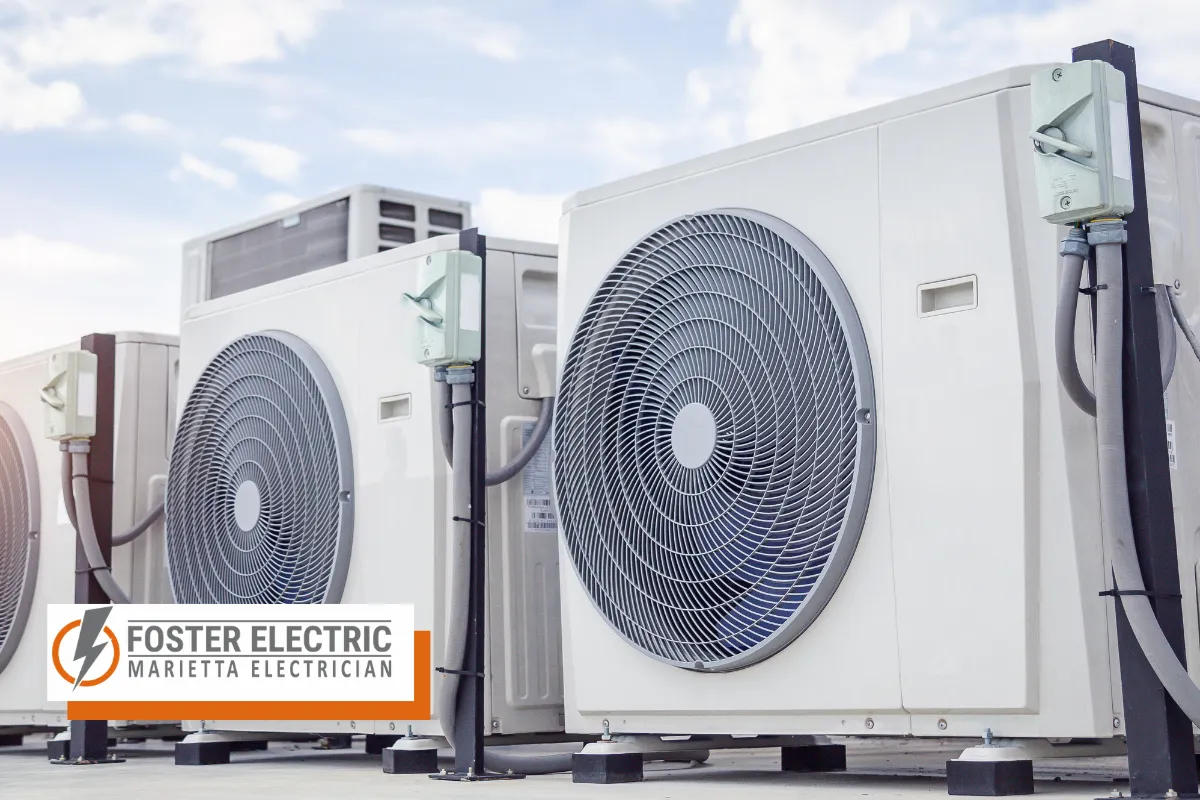
Heating and cooling equipment is often among the largest electrical loads in a home. Even an energy-efficient replacement may require different wiring, breaker protection, or service capacity than the equipment it replaces.
An HVAC installation may include several electrically powered components:
- An outdoor condensing unit or heat-pump compressor
- An indoor air handler
- Electric resistance heat strips
- A furnace blower motor
- Condensate pumps
- Crankcase heaters
- Supplemental controls
- Indoor and outdoor disconnects
Each component has specific voltage, amperage, conductor, and overcurrent-protection requirements. The outdoor unit’s data plate commonly lists a minimum circuit ampacity and maximum overcurrent-protection rating. These values help determine the required conductor size and breaker or fuse rating, but they do not replace a whole-home load calculation.
Cooling Loads and Electric Heating Loads Are Evaluated Differently
Heating and cooling demands require careful treatment because some loads do not operate at the same time. Under applicable electrical load-calculation rules, certain noncoincident loads may be evaluated using the larger demand rather than automatically counting both at full value.
That does not mean every heating and cooling load can be combined or excluded. Heat-pump systems, auxiliary resistance heat, emergency heat, compressors, air handlers, and other components may operate in different combinations. The equipment design and manufacturer specifications determine which loads could run simultaneously.
A qualified electrical contractor coordinates with the HVAC installer to verify:
- The exact model numbers
- The required supply voltage
- Minimum circuit ampacity
- Maximum fuse or breaker size
- Auxiliary heat-strip capacity
- Whether multiple dedicated circuits are required
- Which components may operate at the same time
Without those details, an estimate can overlook one of the system’s largest demands.
Heat Strips Can Change the Answer Quickly
Electric resistance heat strips deserve particular attention. They may be installed inside a heat-pump air handler to provide supplemental heat during cold conditions or defrost cycles.
A home that can support a compressor and blower may not automatically have sufficient capacity for a large auxiliary heat package. Depending on the equipment, heat strips may require one or more high-amperage circuits.
This is one reason homeowners should obtain the final HVAC equipment schedule before approving electrical work. A calculation based on a smaller proposed heat package may no longer be valid if the selected system changes during the project.
Major Appliances That Commonly Trigger a Panel Evaluation
Not every appliance creates a major electrical-capacity concern. A refrigerator replacement, for example, usually does not affect the service calculation as dramatically as converting several gas appliances to electric models.
The following additions are more likely to justify a professional review:
- Electric ranges and cooktops
- Double wall ovens
- Clothes dryers
- Electric water heaters
- Tankless electric water heaters
- Hot tubs and spas
- Workshop machinery
- Large air compressors
- Pool pumps and heaters
- Electric vehicle charging equipment
- Additional HVAC systems
- Electric furnaces
- High-capacity heat pumps
A single appliance may be manageable, while several additions made over time can push an older service beyond its practical capacity. Homeowners frequently replace equipment in stages without revisiting the home’s overall load.
Tankless Electric Water Heaters Require Special Attention
Tankless electric water heaters can demand considerably more power than conventional storage-tank models. Some units use multiple heating elements and require several double-pole breakers.
The absence of a storage tank does not make the electrical demand small. Instantaneous heating requires substantial power, so the proposed model’s specifications must be incorporated into the service calculation before purchase.
In some homes, a tankless conversion may lead to a panel replacement, service upgrade, or reconsideration of the equipment choice. Reviewing the electrical requirements early helps prevent purchasing a unit that cannot be installed economically.
Kitchen Remodeling Can Add More Load Than Expected
A kitchen renovation may add a wall oven, cooktop, microwave, dishwasher, disposal, beverage refrigerator, warming drawer, and additional countertop receptacles. Although individual devices may appear manageable, the combined project can affect both branch-circuit requirements and overall service demand.
Kitchen work may also reveal older wiring that does not provide the grounding, circuit separation, or protective devices expected for the new layout. An electrical service assessment should therefore cover more than the panel’s main breaker.
Seven Factors That Determine Whether Your Panel Is Ready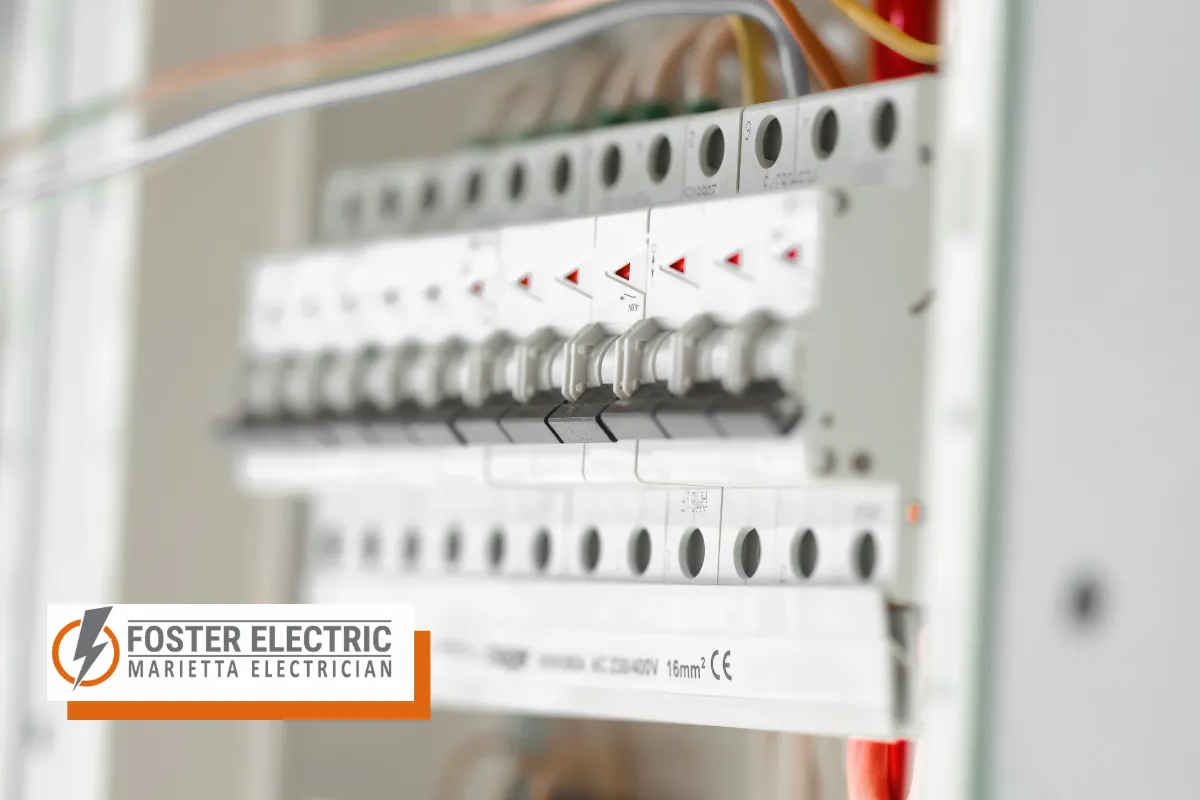
A dependable evaluation looks at the complete electrical system. The following factors provide a clearer answer than panel size alone.
1. The Main Service Rating
The main breaker often provides an initial indication of service size, such as 100, 150, or 200 amps. However, the breaker is only one part of the rating.
The service capacity may also be limited by:
- The panelboard rating
- Service-entrance conductor size
- Meter equipment
- Main disconnect rating
- Utility-side equipment
- Installation configuration
A 200-amp label on one component does not prove that every part of the service is rated for 200 amps. The complete service must be inspected.
2. The Calculated Demand on the Service
A dwelling load calculation accounts for the home’s floor area, general lighting load, required small-appliance circuits, laundry circuit, fixed appliances, cooking equipment, heating, cooling, and other significant loads.
Demand factors are applied where permitted because most household equipment does not draw its full nameplate load simultaneously. This produces a more meaningful result than adding all connected wattage without adjustment.
Georgia currently identifies the 2023 National Electrical Code as its state minimum electrical standard. Marietta also enforces applicable state codes and local requirements for permitted work. The calculation method and project design must therefore follow the code in effect when the permit is submitted. (Georgia Department of Community Affairs)
3. Available Breaker Positions
The panel must have a suitable position for the new circuit. Central air conditioners and many major appliances use 240-volt circuits, which generally require a two-pole breaker occupying two adjacent positions.
A panel directory may show unused circuits that no longer exist, while an apparently full panel may have an approved expansion option. The electrician should verify the panel model, labeling, bus configuration, and manufacturer instructions.
Adding tandem or quad breakers is not automatically acceptable. They may only be used where the panel is specifically designed and listed for them, and the proposed arrangement must comply with applicable limitations.
4. Panel Condition and Manufacturer Compatibility
Even when the calculated load is acceptable, deterioration can make the existing equipment unsuitable for expansion. The inspection may reveal:
- Heat discoloration
- Corrosion or moisture intrusion
- Loose terminations
- Damaged bus connections
- Improperly sized breakers
- Missing knockouts
- Double-tapped terminals not approved for two conductors
- Mismatched breaker types
- Evidence of arcing
- Obsolete or difficult-to-service components
Breakers must be approved for use with the specific panel. A breaker that physically fits is not necessarily listed for that enclosure.
5. Branch-Circuit Wiring
The conductor size, insulation type, termination ratings, installation method, and equipment specifications all affect circuit design.
Installing a larger breaker on existing wiring is not a valid way to increase capacity. The breaker protects the conductors, and oversizing it can allow wiring to overheat before the protective device opens.
A new appliance may require an entirely new circuit from the panel to the equipment location. The route, cable type, raceway, disconnecting means, and physical protection should be planned before walls or finishes are completed.
6. Grounding and Bonding
A service assessment should include the grounding electrode system and bonding arrangement. These components help establish a safe path for fault current and stabilize the electrical system.
Older homes may have undergone partial alterations that created improper neutral-to-ground connections downstream of the service disconnect. Other properties may have damaged grounding electrode conductors, missing bonding jumpers, or outdated installation details that should be corrected during permitted work.
7. Future Electrical Plans
The best solution should account for reasonably foreseeable improvements. Replacing a panel solely to support one air conditioner may be shortsighted when the homeowner also plans to add an electric range, workshop, finished basement, or vehicle charger.
Future planning does not mean oversizing equipment without justification. It means discussing likely additions so the electrical service can be designed efficiently and avoid repeated reconstruction.
Read What Electrical Upgrades Does an Electrician Recommend for Solar Panels in Marietta, GA?
Warning Signs That Your Existing System May Be Struggling
A breaker trip does not always mean the entire service is overloaded. The problem may involve a single branch circuit, defective appliance, loose connection, ground fault, short circuit, or failing breaker.
Nevertheless, repeated symptoms should not be ignored.
Contact a local electrician when you notice:
- Breakers that trip repeatedly during normal use
- Lights that dim when an appliance starts
- Buzzing or crackling at the panel
- A burning odor near electrical equipment
- Warm or discolored breakers
- Flickering throughout multiple rooms
- Rust or water inside the panel
- Appliances that operate inconsistently
- A main breaker that trips under heavy demand
- Extension cords being used as permanent wiring
Smoke, sparking, visible arcing, or an intense burning smell may indicate an immediate hazard. Avoid touching damaged equipment, move away from the affected area, and contact emergency services when fire or imminent danger is present.
Dimming Lights Need Proper Diagnosis
A brief, minor voltage dip when a large motor starts is different from severe or persistent dimming. Noticeable changes throughout the house could involve undersized conductors, loose service connections, utility issues, equipment starting current, or other faults.
Because several causes produce similar symptoms, guessing from the behavior alone is unreliable. Diagnostic testing can determine whether the issue is inside the home, at a specific circuit, or associated with the incoming supply.
How a Professional Load Evaluation Is Performed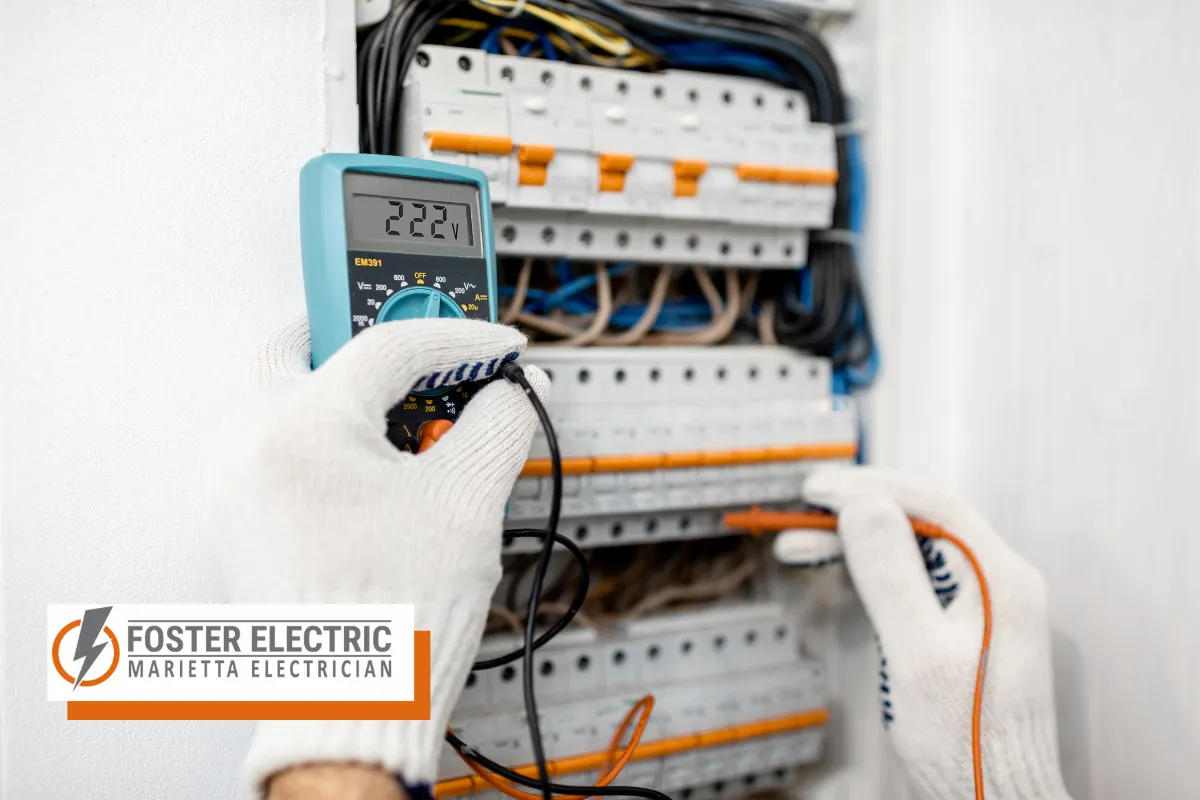
A thorough assessment generally begins with information gathering rather than panel replacement.
Step 1: Document the Existing Service
The electrician identifies the service rating and inspects the meter, disconnect, panelboard, feeder or service conductors, grounding, bonding, and visible installation conditions.
Panel labels and breaker directories are checked, but they are not assumed to be accurate. Circuits may need to be traced when the directory is incomplete or outdated.
Step 2: Create an Inventory of Existing Loads
The calculation may include:
- General lighting and receptacle demand
- Kitchen small-appliance circuits
- Laundry facilities
- Electric cooking equipment
- Clothes dryers
- Water heating
- Heating and air conditioning
- Permanently connected appliances
- Motors
- Other substantial equipment
The professional may need nameplate data, equipment schedules, floor area, or information about fuel sources to complete the calculation correctly.
Step 3: Add the Proposed Equipment
The exact new equipment is then incorporated. For HVAC work, the calculation should reflect the selected condenser, air handler, supplemental heat, and associated components.
For an appliance, the manufacturer’s electrical requirements guide circuit design. Voltage, phase, wattage, amperage, minimum circuit ampacity, and maximum overcurrent protection may all be relevant.
Step 4: Apply Required Demand Rules
The connected load is not always the calculated demand. Code-recognized demand factors and rules for noncoincident loads may be applied where appropriate.
This stage requires technical judgment because the treatment of cooking appliances, dryers, HVAC equipment, and fixed appliances is not identical. A simplified online calculator may be useful for general education, but it cannot inspect the installation or account for every project condition.
Step 5: Compare the Result With the Existing Service
The calculated demand is compared with the permitted capacity of the service and related equipment. The electrician also confirms whether the proposed branch circuit can be installed safely.
The resulting recommendation may be:
- Install the new dedicated circuit
- Reconfigure or replace the existing panel
- Add an approved subpanel
- Upgrade the electrical service
- Reduce or manage the proposed load
- Select equipment with different electrical requirements
- Complete repairs before adding new demand
Can a Subpanel Solve a Capacity Problem?
A subpanel provides more circuit spaces, but it does not create additional utility-service capacity. It is useful when the existing service has adequate calculated capacity but the main panel lacks enough breaker positions or is inconveniently located for new circuits.
For example, a properly designed subpanel may serve a workshop, addition, or group of nearby appliances. Its feeder must be sized for the calculated load, and the installation must follow grounding, bonding, overcurrent-protection, and working-clearance requirements.
A subpanel is not an appropriate shortcut when the existing service is already inadequate. Moving circuits into a second enclosure does not reduce the total demand placed on the main service.
When a Panel Replacement Is Enough—and When the Service Must Change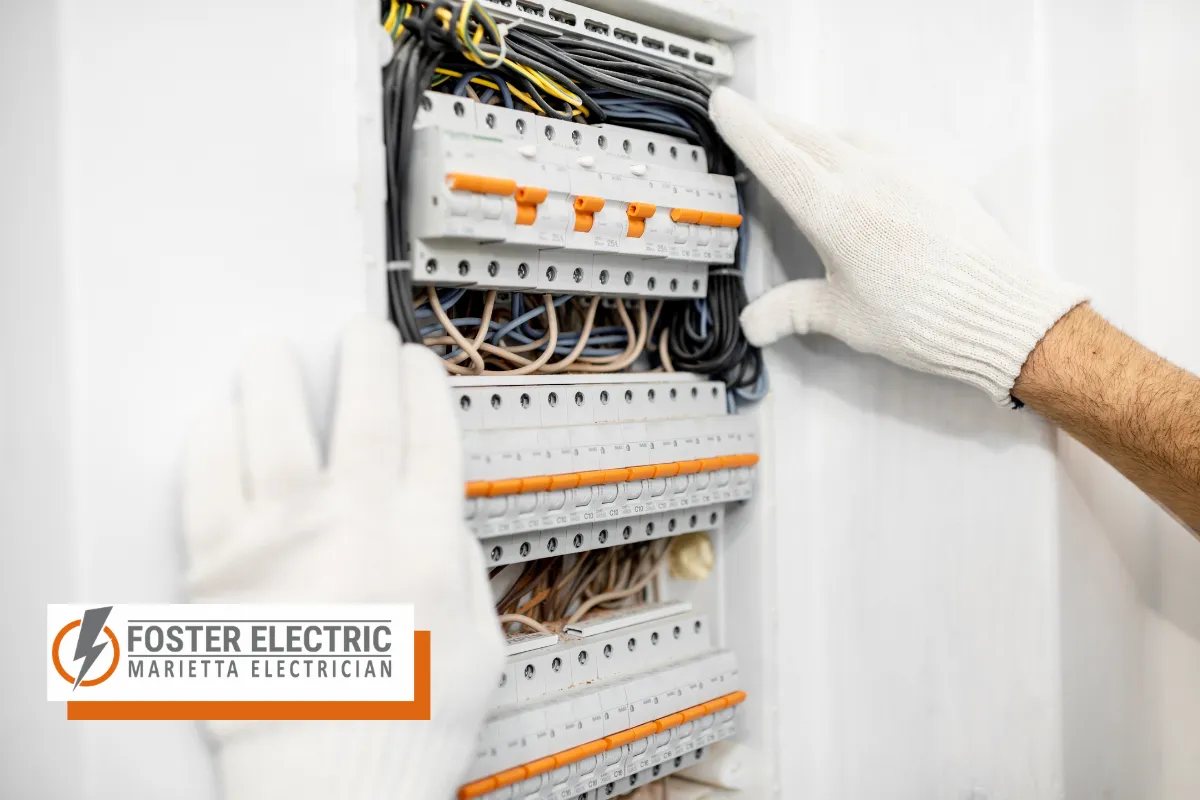
“Panel upgrade” is often used to describe several different projects. The distinction affects scope, permits, utility coordination, and cost.
Panel Replacement With the Same Service Capacity
A panel may be replaced while retaining the existing service rating. This approach can address damaged, obsolete, crowded, or unsuitable equipment when the calculated demand does not require more service capacity.
The project may provide:
- More usable breaker positions
- Modern compatible equipment
- Clearer circuit organization
- Replacement of deteriorated components
- Improved access for future maintenance
It does not automatically increase the number of amps available from the utility.
Full Service-Capacity Upgrade
A service upgrade increases the rated capacity of the electrical supply. Depending on the property, it may involve a new panel, main disconnect, meter equipment, service conductors, grounding components, and utility coordination.
The electrical contractor must evaluate the complete installation rather than changing only the main breaker. A larger breaker cannot be installed unless the conductors, panel, meter equipment, and every affected component are properly rated.
Load Management as a Possible Alternative
In some installations, listed load-management equipment can control when certain loads operate. For example, a system may prevent two large appliances from drawing power simultaneously.
This approach is project-specific and must be accepted under the applicable code and permitting requirements. It is not a universal substitute for adequate service capacity, but it may offer a practical option where a conventional upgrade is difficult.
Why Breaker Arithmetic Produces the Wrong Answer
Homeowners sometimes add the numbers printed on all panel breakers and compare the total with the main breaker. A panel with a 200-amp main may contain branch breakers whose ratings add up to far more than 200 amps.
That condition is common and does not, by itself, mean the panel is overloaded. Breaker ratings show the maximum allowed for individual circuits, while the service calculation estimates the likely combined demand.
The opposite mistake is assuming that a 200-amp main always leaves ample capacity. A home with electric heat, water heating, cooking equipment, multiple HVAC systems, and other large loads may have limited remaining capacity despite having a modern panel.
Only a calculation based on the actual property and proposed equipment provides a defensible answer.
Why the 80% Rule Is Frequently Misapplied
The phrase “80% rule” is often used too broadly. Certain continuous loads—those expected to operate at maximum current for three hours or more—require specific sizing treatment. This does not mean a homeowner can determine service availability simply by multiplying the main-breaker rating by 80%.
Service calculations, feeder calculations, branch-circuit sizing, motor loads, HVAC nameplate requirements, and continuous-load provisions are related but distinct concepts.
For example, the correct breaker for an air-conditioning unit is not selected from its running amperage alone. The equipment nameplate and applicable motor-compressor rules influence conductor and overcurrent-protection sizing.
This complexity is why a formal electrical service review is more reliable than a general percentage-based estimate.
Permits and Inspections for Marietta Electrical Work
Marietta states that an electrical permit is required for work performed on electrical systems. The city also identifies new HVAC installation as work that requires permitting, and its mechanical-permit information says heating and air-conditioning work requires a mechanical permit.
Depending on the project, electrical and mechanical approvals may both be involved. Inspection requirements can apply to new circuits, disconnects, panel replacements, service upgrades, and HVAC installations.
Permits and inspections provide documented review of work that can affect fire protection, shock protection, equipment operation, and future property transactions. They also help ensure that concealed wiring is examined at the correct stage.
Because code editions, amendments, administrative procedures, and utility requirements can change, permit details should be verified for the specific property and project date. Work inside the city limits may follow different administrative procedures from work elsewhere, even when the mailing address includes “Marietta.”
Questions to Ask Before Buying New Equipment
Electrical planning should happen before a homeowner signs a final equipment contract. Asking the following questions can prevent design changes and unexpected costs:
- What are the exact model numbers?
- What voltage does each component require?
- How many dedicated circuits are needed?
- What is the minimum circuit ampacity?
- What is the maximum breaker or fuse rating?
- Does the HVAC system include auxiliary heat strips?
- Could the equipment package change before installation?
- Has a dwelling load calculation been completed?
- Are electrical and mechanical permits included?
- Could another equipment configuration reduce the required electrical work?
The HVAC installer or appliance supplier should provide specification sheets rather than verbal estimates. Those documents allow the electrician to design around the actual equipment.
Preparing for an Electrical Service Appointment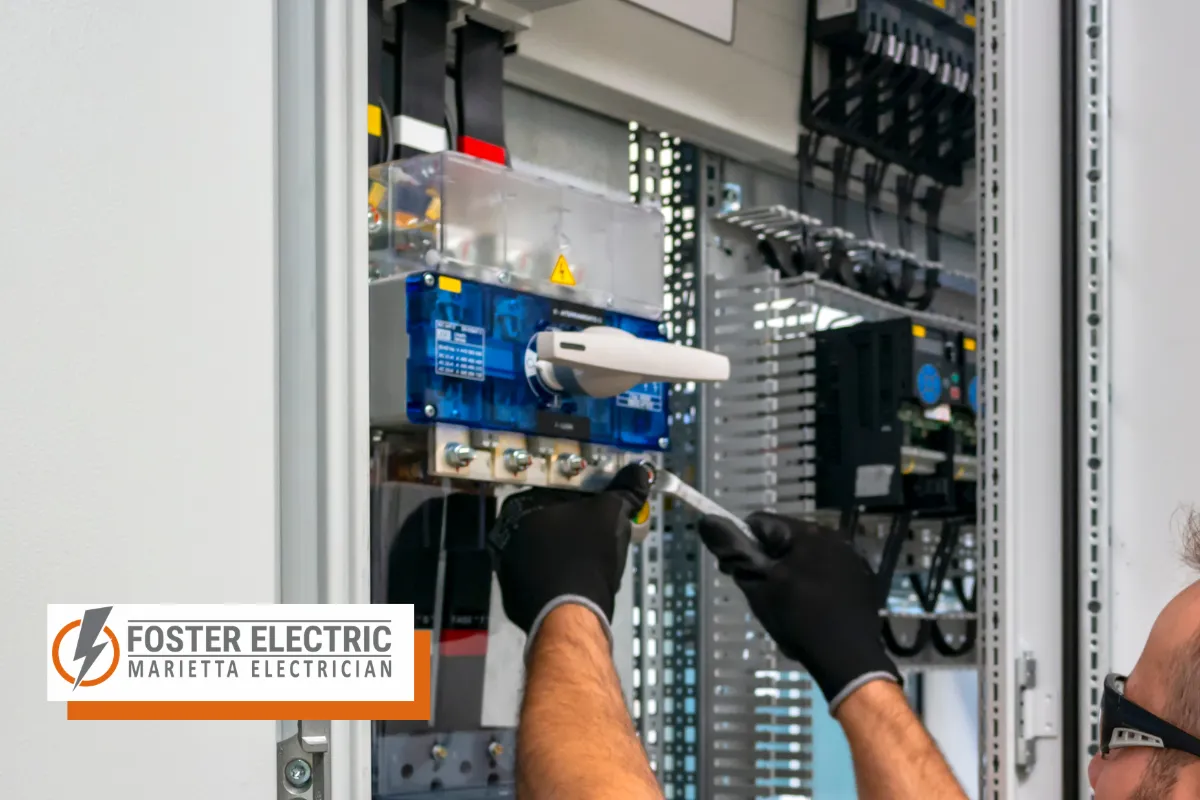
A few preparations can make the evaluation more efficient.
Gather the proposed equipment specifications, recent remodeling plans, and information about future additions. Make sure the electrical panel, meter area, attic access, crawlspace access, and equipment location are reasonably accessible.
Tell the electrician about intermittent symptoms, previous repairs, water intrusion, unexplained breaker trips, or circuits that have been altered. Small details may reveal conditions that are not visible during a brief inspection.
Avoid removing the panel cover yourself. Energized service equipment contains components that may remain live even when the main breaker is switched off.
The Safest Decision Comes From the Whole-System Picture
Determining whether a panel can handle a new HVAC unit or appliance requires more than finding an empty breaker slot. The decision depends on the calculated household demand, equipment nameplate data, panel rating, conductor capacity, circuit space, service condition, grounding, and code requirements.
Some homes need only a properly sized dedicated circuit. Others benefit from a panel replacement, subpanel, load-management system, or complete service upgrade. The right solution depends on the property rather than a one-size-fits-all amp rating.
Completing the electrical evaluation before purchasing or installing equipment protects the project schedule and reduces the risk of unsafe shortcuts. It also gives homeowners a realistic view of the work required to support future electrification.
Electrician in Marietta, GA – Foster Electric
At Foster Electric, we help homeowners determine whether an electrical panel can safely support a new HVAC system, kitchen appliance, water heater, or other high-demand equipment. Our electrician will inspect the existing service, review equipment specifications, evaluate panel space, and identify conditions that could affect installation. We provide practical recommendations based on your home’s actual needs instead of assuming that an open breaker position means sufficient capacity. Whether the project requires a dedicated circuit, panel replacement, service upgrade, or targeted repair, we focus on safe, dependable electrical service. We serve Marietta, Georgia, and prominent surrounding areas with professional residential solutions. Call Foster Electric at (404) 855-4797 or fill out our contact form to schedule an evaluation before installing your new equipment.
Frequently Asked Questions
Can smart appliances reduce the electrical capacity my home needs?
Smart controls may reduce energy consumption or move operation to off-peak periods, but they do not automatically reduce the load used for electrical design. Capacity decisions depend on equipment ratings, operating characteristics, and code-recognized calculation methods. A connected appliance that can be scheduled through an app may still draw its full rated current when operating. Listed energy-management equipment can sometimes control loads in a way that affects system design, but ordinary scheduling features are not equivalent to an approved load-management system. The proposed controls, equipment instructions, and installation design must be evaluated together before reduced demand can be assumed.
Does a more energy-efficient air conditioner always use a smaller circuit?
Not necessarily. Higher efficiency can reduce operating energy, but circuit requirements depend on the specific equipment’s electrical characteristics. Two units with similar cooling capacities may have different compressor designs, startup behavior, minimum circuit ampacity, or maximum overcurrent-protection ratings. A variable-speed system may operate at lower output much of the time while still requiring a circuit based on manufacturer data. Heat-pump packages may also include air handlers and supplemental heating components that need separate circuits. Always compare the complete electrical specifications of the selected models rather than assuming that a higher efficiency rating guarantees a smaller breaker or lower service demand.
Can solar panels provide the extra capacity needed for a new appliance?
A solar array produces energy, but it does not automatically increase the rating of the home’s electrical service or panel. The panel, bus, conductors, breakers, and service equipment must still be suitable for the connected loads. Solar generation also varies throughout the day, while appliances may operate when production is low or absent. Battery storage and controlled energy systems can influence how power is supplied, but they require engineered coordination with the home’s electrical distribution. A professional must evaluate both the load side and generation connections before determining whether solar, storage, or energy management changes the required improvements.
Will replacing a gas appliance with an electric model affect more than one circuit?
It can. The new appliance may require a dedicated 240-volt circuit, but the conversion can also affect the whole-home service calculation, panel layout, wiring route, disconnect requirements, and future equipment planning. Removing the gas appliance may involve separate mechanical or plumbing work beyond the electrical scope. Converting several appliances—such as the range, dryer, water heater, and furnace—can have a cumulative impact that is much greater than any single circuit addition. Before beginning an electrification project, prepare a list of all planned conversions so the electrical design can address the final load rather than each appliance separately.
Can an appliance be installed temporarily before the panel upgrade is completed?
A high-demand appliance should not be connected to an undersized circuit or inadequate service as a temporary measure. Extension cords, adapters, shared circuits, oversized breakers, and improvised connections can create shock, overheating, and fire hazards. If temporary operation is essential during construction, it needs a properly designed power source that complies with the equipment instructions and applicable requirements. In many cases, completing the permanent circuit or service work first is the safest and simplest sequence. Coordinate the appliance delivery, electrical inspection, and final connection so the equipment is not energized until the approved supply is ready.
Disclaimer: This article provides general educational information and is not a substitute for an on-site electrical assessment. Permit, utility, equipment, and code requirements should be confirmed for the specific Marietta property before work begins.